Corporate Poison : The Muesli Paradox
When Your Healthy Breakfast Is Just Dessert in Disguise
Walk into any modern supermarket in India and you'll see an entire aisle dedicated to breakfast cereals that promise health, energy, and weight loss. Among them sits the quiet hero of the "healthy breakfast" crowd: muesli.
The packaging is almost always the same. Earthy colors. Pictures of oats spilling out of burlap sacks. Almonds, raisins, and honey drizzles frozen mid-air in golden perfection. Words like "Natural," "High Fiber," "No Added Sugar," "Whole Grain," and "Fitness."
It looks like the responsible choice. The adult choice. The breakfast of someone who reads nutrition labels and jogs on weekends.
But flip the packet over and the story begins to change.
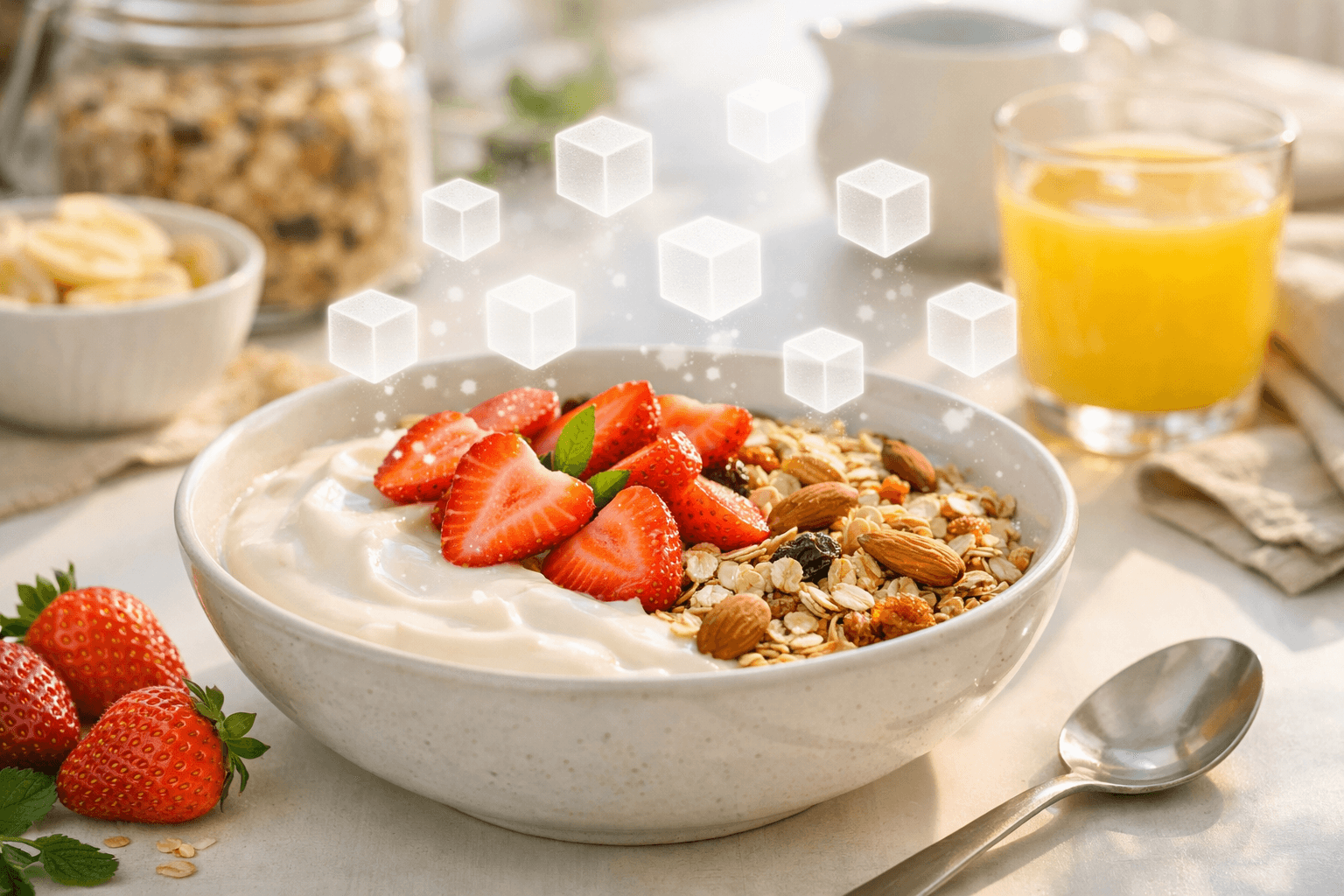
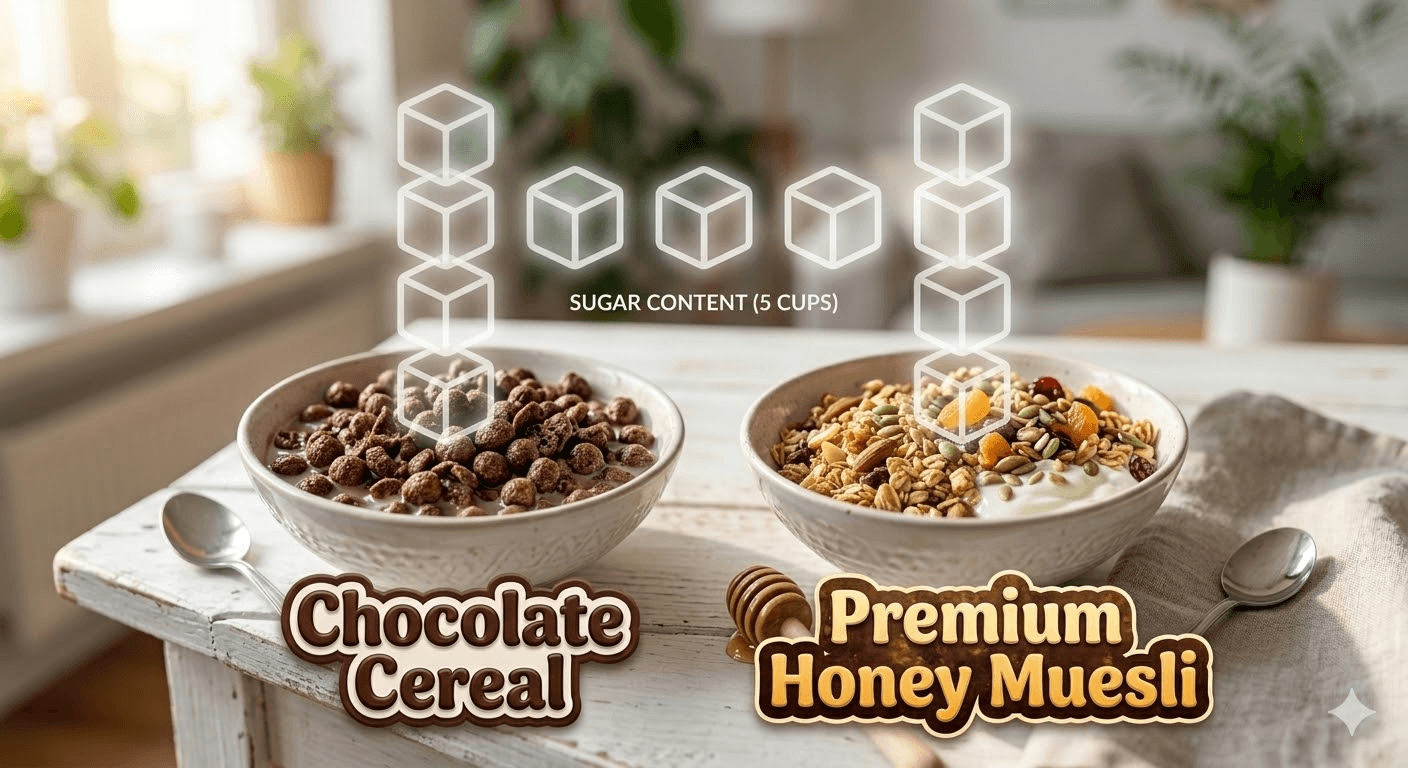
In many popular brands sold across India, a bowl of muesli contains as much — or sometimes more — sugar per gram than chocolate cereals that openly advertise themselves as dessert.
The difference is simple: chocolate cereals are honest about it.
Muesli hides it better.
The Original Muesli Wasn't Sweet
Muesli wasn't always this way.
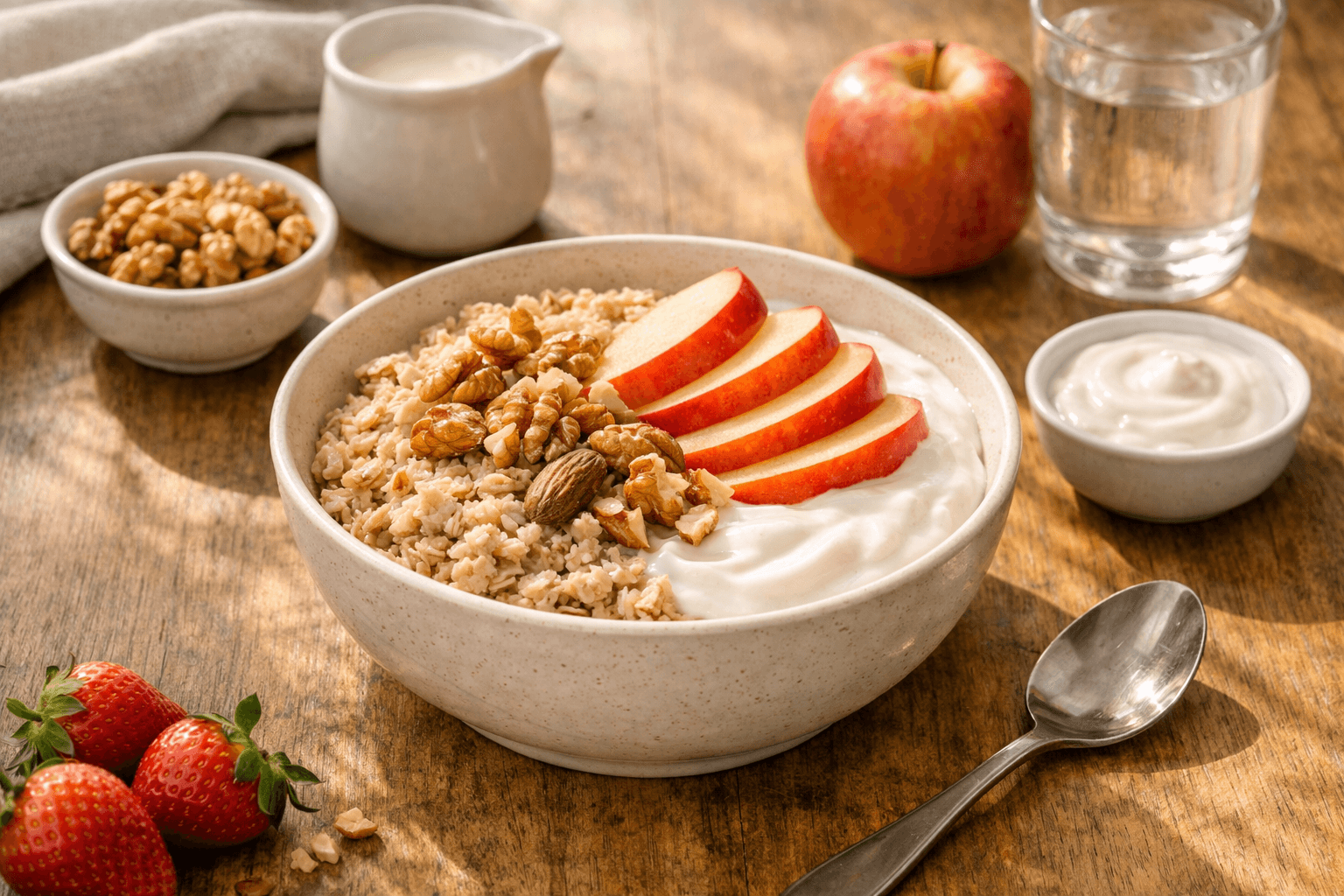
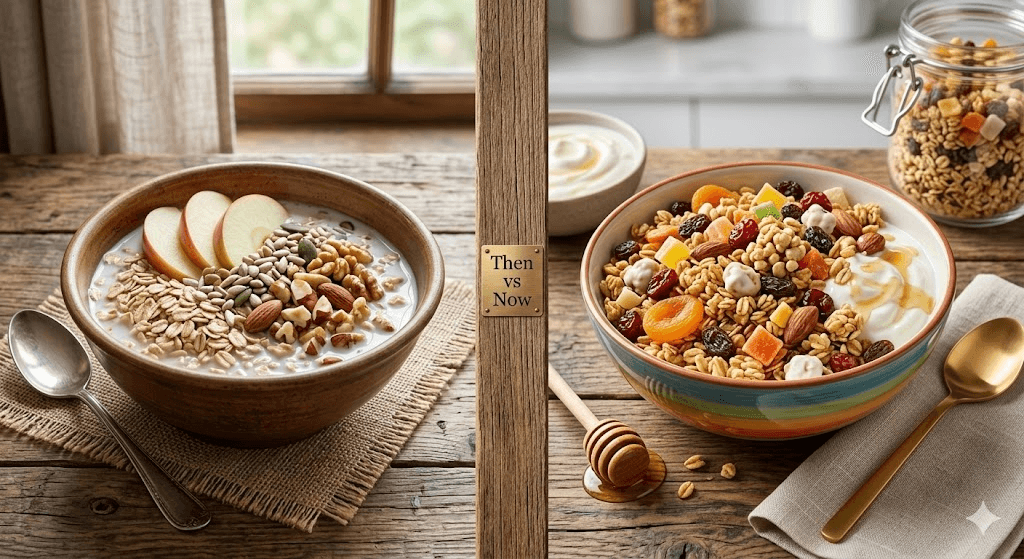
The original version was created in the early 1900s by Swiss physician Dr. Maximilian Bircher-Benner, who designed it as a simple hospital meal for patients. His recipe was minimal:
Raw oats
Fresh grated apple
Nuts
A small amount of milk or yogurt
No sugar. No syrups. No processed fruit chunks.
It was designed to be high-fiber, slow-digesting, and naturally sweet from fresh fruit.
What you see on modern supermarket shelves today is something very different.
Modern industrial muesli is engineered for taste first, health branding second.
The Sugar Trojan Horse: Dried Fruit
The biggest sugar source in most commercial muesli isn't obvious. It's not the oats. It's not the nuts.
It's the dried fruit.
Dried fruit seems healthy. After all, it's just fruit without the water, right?
Not quite.
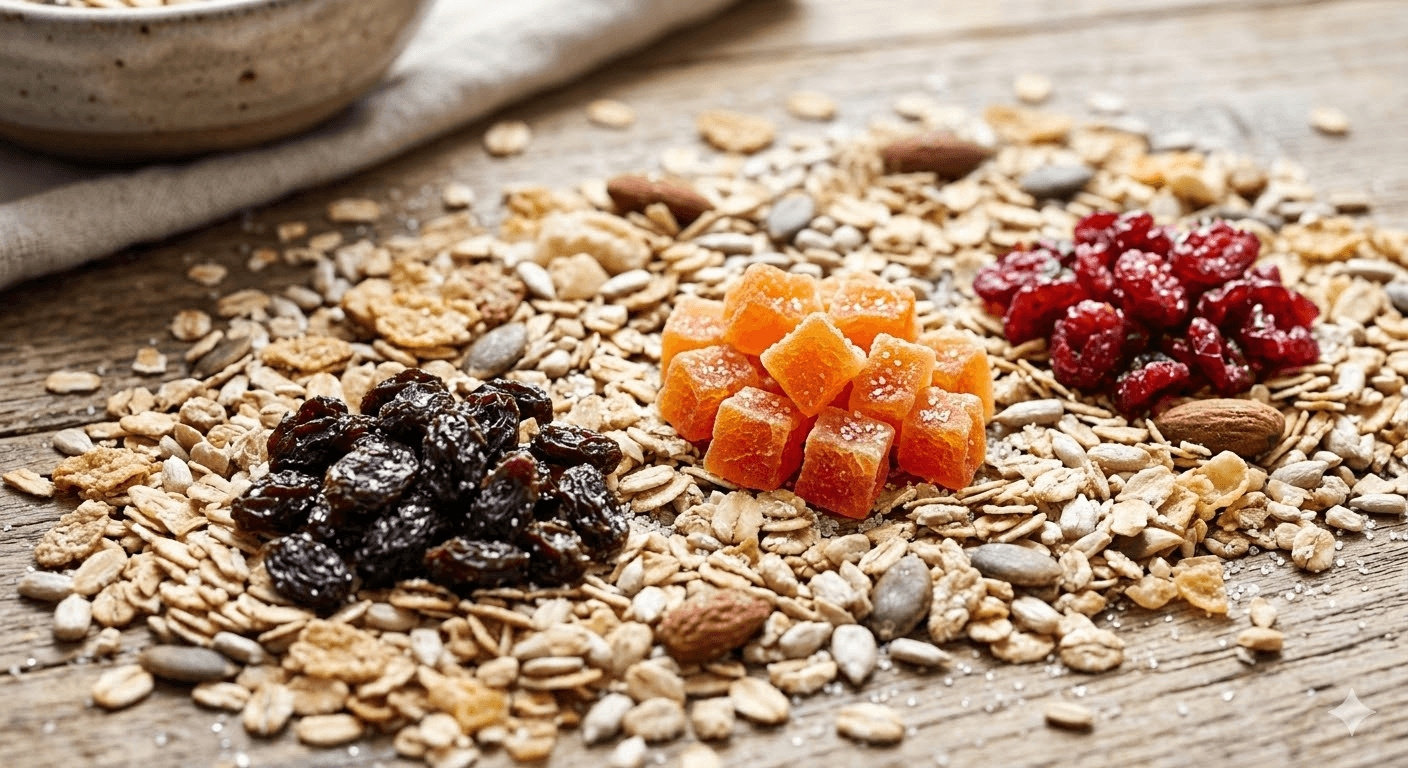
When fruit is dried, the sugar becomes concentrated. Remove the water from grapes and you get raisins. A small handful of raisins can contain the same sugar as an entire bowl of grapes.
But it gets worse in packaged cereals.
Many dried fruits inside commercial muesli are not plain dried fruit. They are often coated in additional sugar or glucose syrup to improve texture, color, and shelf life.
You'll commonly find ingredients like:
Sugar-coated raisins
Glucose-fructose syrup
Invert sugar syrup
Candied papaya
Sweetened dried cranberries
In some brands, these sugar-coated fruit pieces make up 25–40% of the entire product.
So what looks like a healthy mix of fruit and oats is often closer to a dessert granola disguised as health food.
The Honey Cluster Illusion
If dried fruit is the first sugar trap, honey clusters are the second.
Many premium muesli brands proudly advertise "honey roasted clusters." These crunchy golden chunks feel wholesome because honey has a natural, health-friendly reputation.
But nutritionally speaking, honey is still sugar.
In fact, honey is composed of roughly 80% sugar — mostly glucose and fructose.
To create those crunchy clusters that survive shipping and sit crisp on store shelves for months, manufacturers typically combine:
Oats
Sugar or honey
Vegetable oil
Syrups or binding agents
The mixture is baked into solid pieces.
The result is delicious. Crunchy. Addictive.
But it dramatically increases the glycemic load of the cereal.
A bowl of muesli with honey clusters can easily contain 15–20 grams of sugar — sometimes more depending on the brand.
For context:
That’s roughly the same sugar content as a chocolate cereal marketed to children.
The difference? One is sold with cartoon characters.
The other is sold with yoga poses.
The "No Added Sugar" Loophole
This is where marketing becomes particularly clever.
You may have noticed that many muesli packets proudly claim:
"No Added Sugar."
Technically, this can still be true — even if the product is loaded with sweet ingredients.
How?
Because food labeling laws distinguish between added table sugar and naturally occurring sugars.
So if a cereal contains large amounts of:
Sweetened dried fruit
Fruit juice concentrate
Date paste
Honey
Companies can still claim "No Refined Sugar Added."
To your body, however, sugar is sugar.
Your bloodstream doesn't care whether glucose came from a spoon of sugar or from a concentrated raisin paste.
Either way, your pancreas has to release insulin to manage it.
This is why many nutritionists now advise ignoring front-of-package claims entirely and focusing on the actual sugar number in the nutrition table.
If a cereal contains more than 10–12 grams of sugar per 100g, it's no longer a low-sugar breakfast.
Many commercial mueslis cross 18–25 grams per 100g.
At that point, the difference between "health cereal" and "dessert cereal" becomes mostly branding.
[Image 5 — BODY: A realistic cereal packet nutrition label with the "Sugars: 21g per 100g" section highlighted in bold red. The front of the box visible in the background says "No Added Sugar" in large green letters.]
How to Spot a Truly Healthy Muesli
The goal isn't to eliminate muesli entirely. A well-made version can still be one of the healthiest breakfasts available.
But it requires reading the label like a detective.
Rule 1: Check the ingredient order
Ingredients are listed by weight. The first ingredient should always be whole oats. If sugar or syrups appear in the top three ingredients, it's no longer a healthy cereal.
Rule 2: Watch the dried fruit percentage
A small amount of raisins or cranberries is fine. But if the cereal looks like a fruit salad with a few oats sprinkled in, sugar is likely dominating the product.
Rule 3: Avoid clusters
Clusters almost always mean added sweeteners and oils.
Rule 4: Check the sugar number
Aim for less than 10g of sugar per 100g if possible.
Or take the simplest route of all: make it yourself.
Plain rolled oats, a handful of nuts, seeds, and fresh fruit added at home gives you everything muesli was meant to be — without the sugar traps.
The Long Game
Breakfast is the first metabolic signal your body receives every day.
Start the morning with a high-sugar cereal — even one disguised as health food — and your blood sugar rises quickly, followed by a crash a few hours later. That crash is what sends many people reaching for tea biscuits or another snack before lunch.
Start the day with slow-digesting oats, fiber, and healthy fats, and your energy stays stable for hours.
The irony of the muesli aisle is that the product designed to be one of the healthiest breakfasts ever created has been gradually transformed into something very different.
Not junk food exactly.
But not quite health food either.
The next time you pick up a bag of muesli, ignore the words on the front.
Flip the packet over.
The truth is always printed on the back.

Reading Time
7 min read