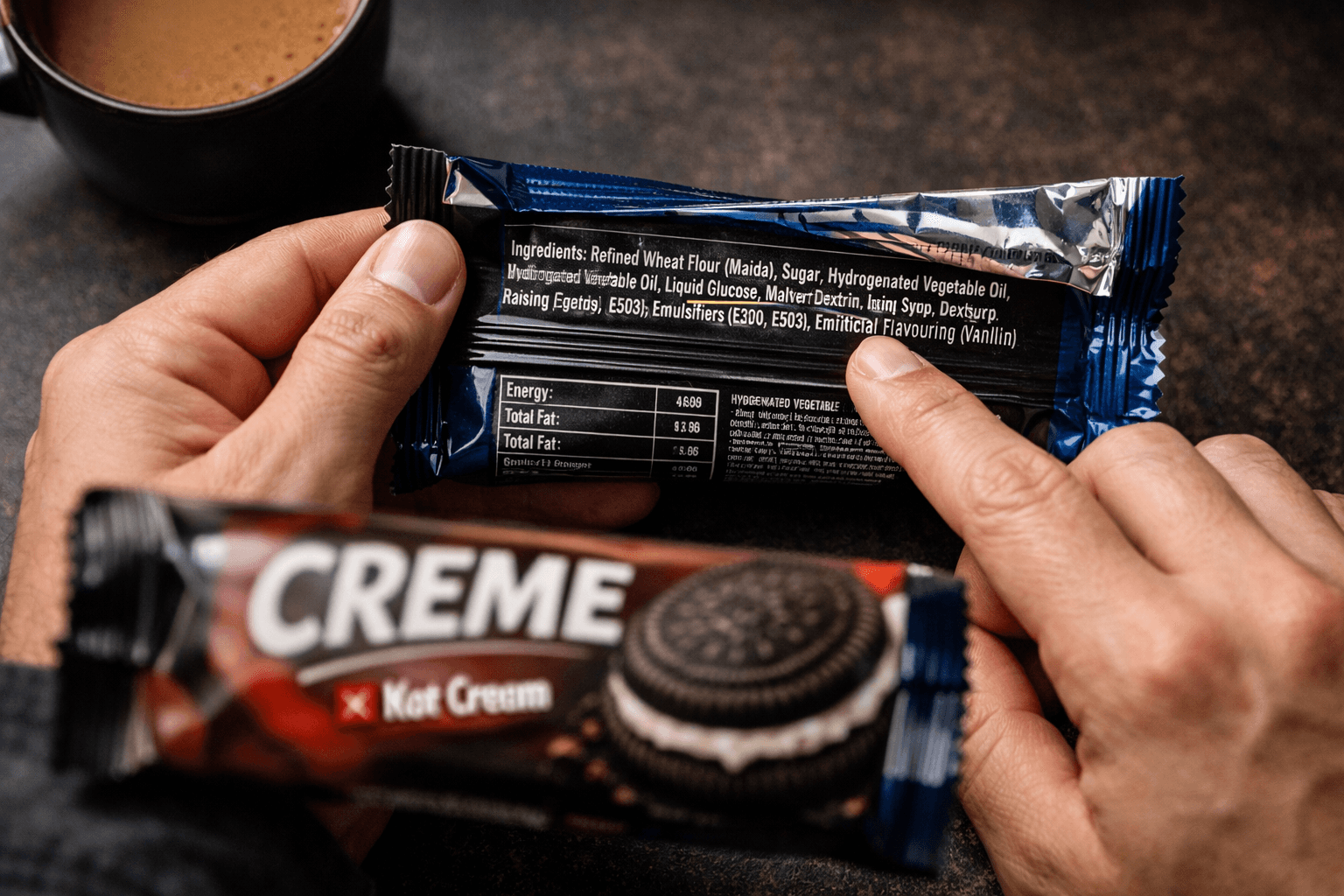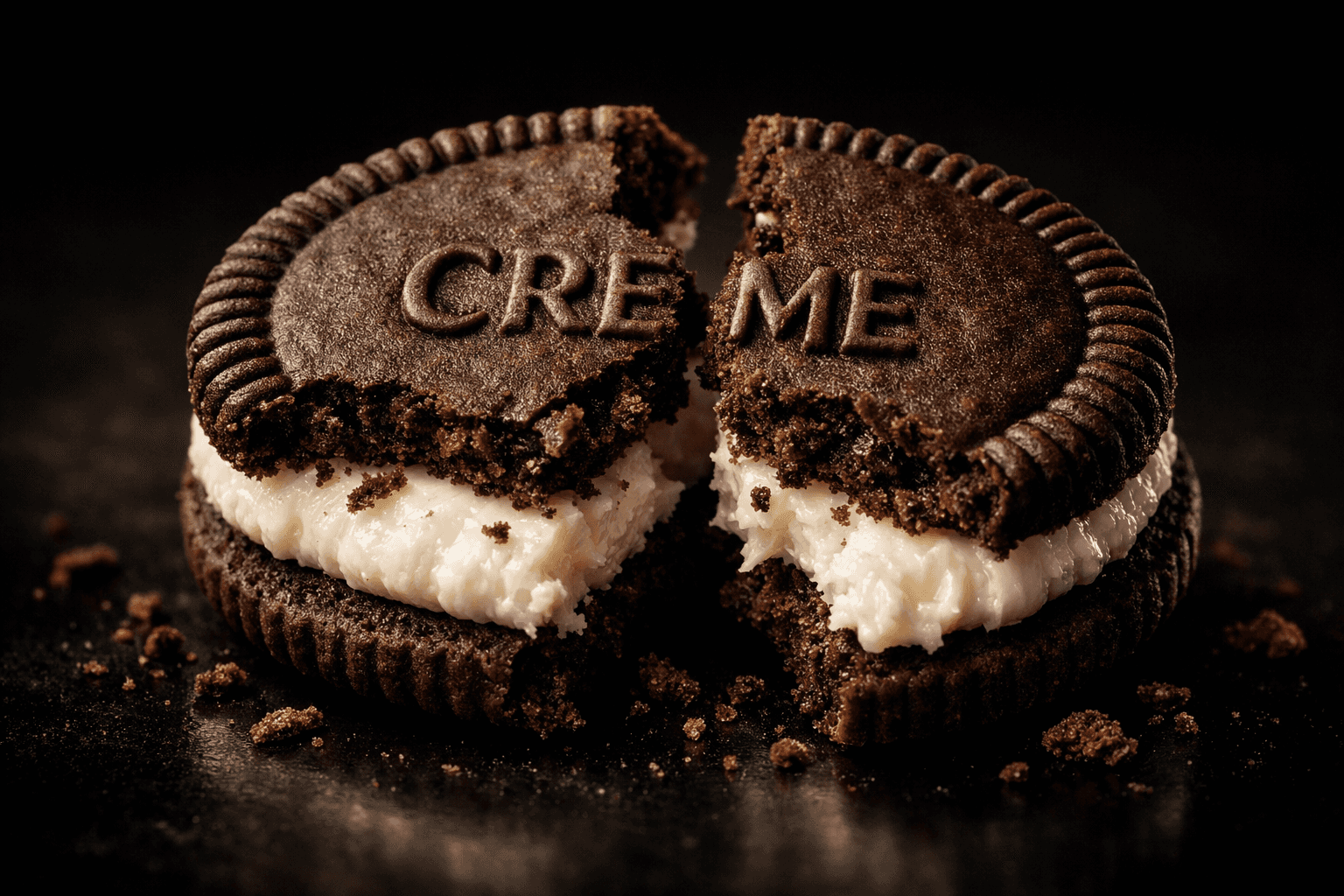
Corporate Poison – Grammar behind "Creme"
Why Companies Can't Spell it "Cream"
Pick up any popular sandwich biscuit, wafer, or chocolate bar in India. Look at the packaging carefully. You will almost never find the word "Cream" written on it. Instead, you'll see "Creme," "Kreme," "Crème," or the hilariously vague "Creamy Filling."
It's easy to dismiss this as creative branding. A funky French spelling to make the product feel premium. But it's not style. It's strategy. And it's legally mandated.
The reason companies can't write "Cream" on their product is devastatingly simple: there is no cream in it.
The Legal Line in the Sand
Food regulation authorities around the world — including the FSSAI (Food Safety and Standards Authority of India) — have strict definitions for the word "Cream." To legally use the term on a food label, the product must contain a minimum percentage of actual dairy milk fat. In most jurisdictions, this threshold is around 10-18% milk fat, depending on the product type.
Dairy cream is expensive. It spoils quickly. It requires cold storage and has a short shelf life. For a biscuit company producing millions of units a day that need to sit on a store shelf for 6-12 months at room temperature, real cream is a logistical and financial nightmare.
So they don't use it. Not a drop.
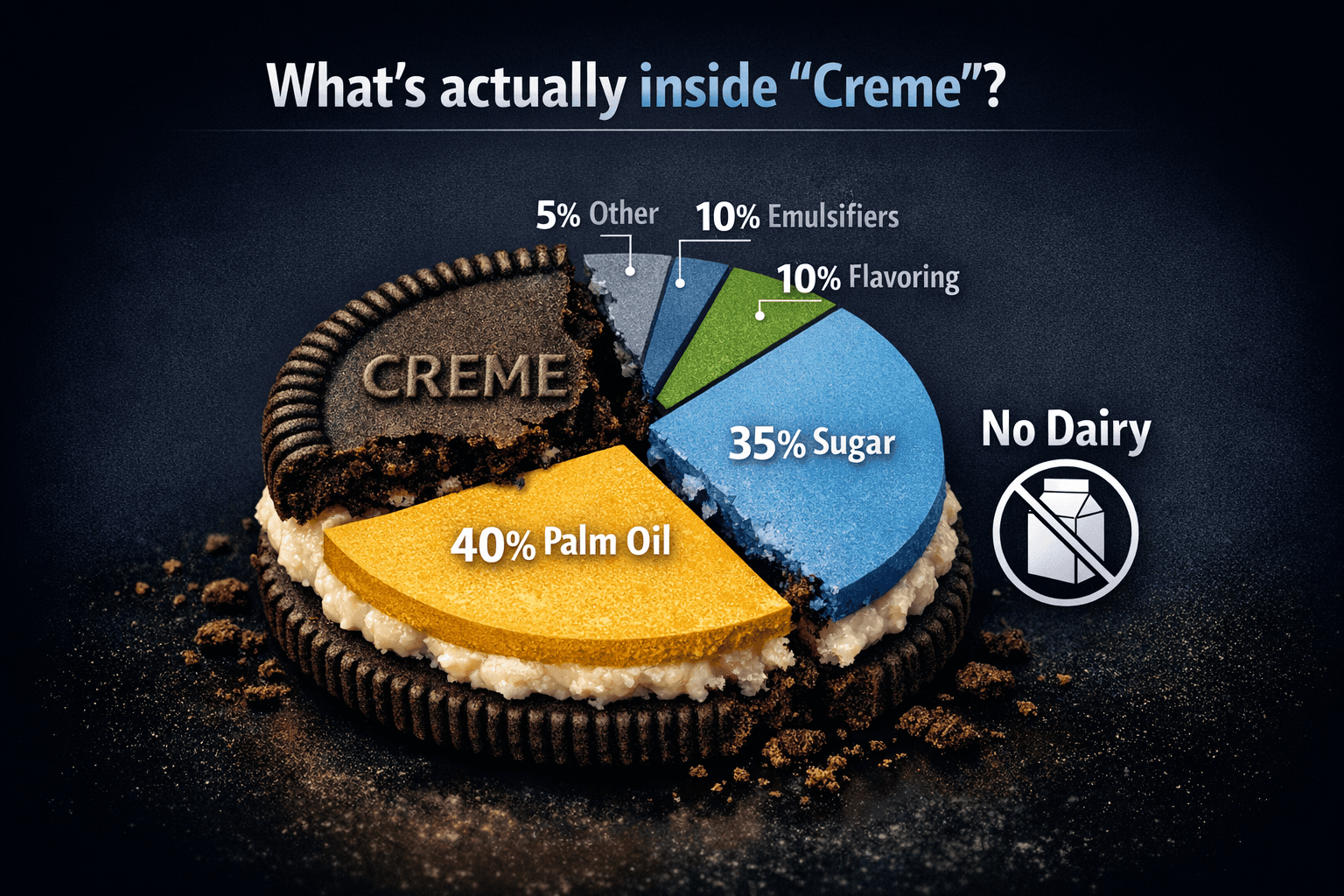
Instead, the "cream" filling you've been eating your entire life is primarily composed of:
- Hydrogenated Vegetable Oil (Palm Oil): The base of nearly every "creme" filling. It provides the smooth, spreadable texture that mimics cream.
- Sugar: The second-largest component. It masks the blandness of the oil.
- Emulsifiers (like Soy Lecithin): These are chemical agents that force the oil and sugar to blend into a smooth, uniform paste rather than separating.
- Artificial Flavoring: Vanillin (synthetic vanilla), cocoa powder (in small quantities for "chocolate creme"), and other chemical flavor compounds.
- Stabilizers and Preservatives: To keep it looking and tasting the same for months.
That's it. That's the entire "cream" — sugar-coated industrial oil held together by chemistry.
The Deliberate Misspelling
Here's where the genius — and the cynicism — of corporate food marketing becomes clear.
Since the law prohibits using "Cream" for non-dairy products, companies needed a workaround that still evoked the same association in the consumer's mind. The solution was elegant: just misspell it.
"Creme" looks like Cream. It sounds like Cream when you say it in your head. Your brain registers it as Cream. But legally, it is a completely different word with no regulated definition. There is no food safety standard that defines what "Creme" must contain. It can be anything. Literally anything.
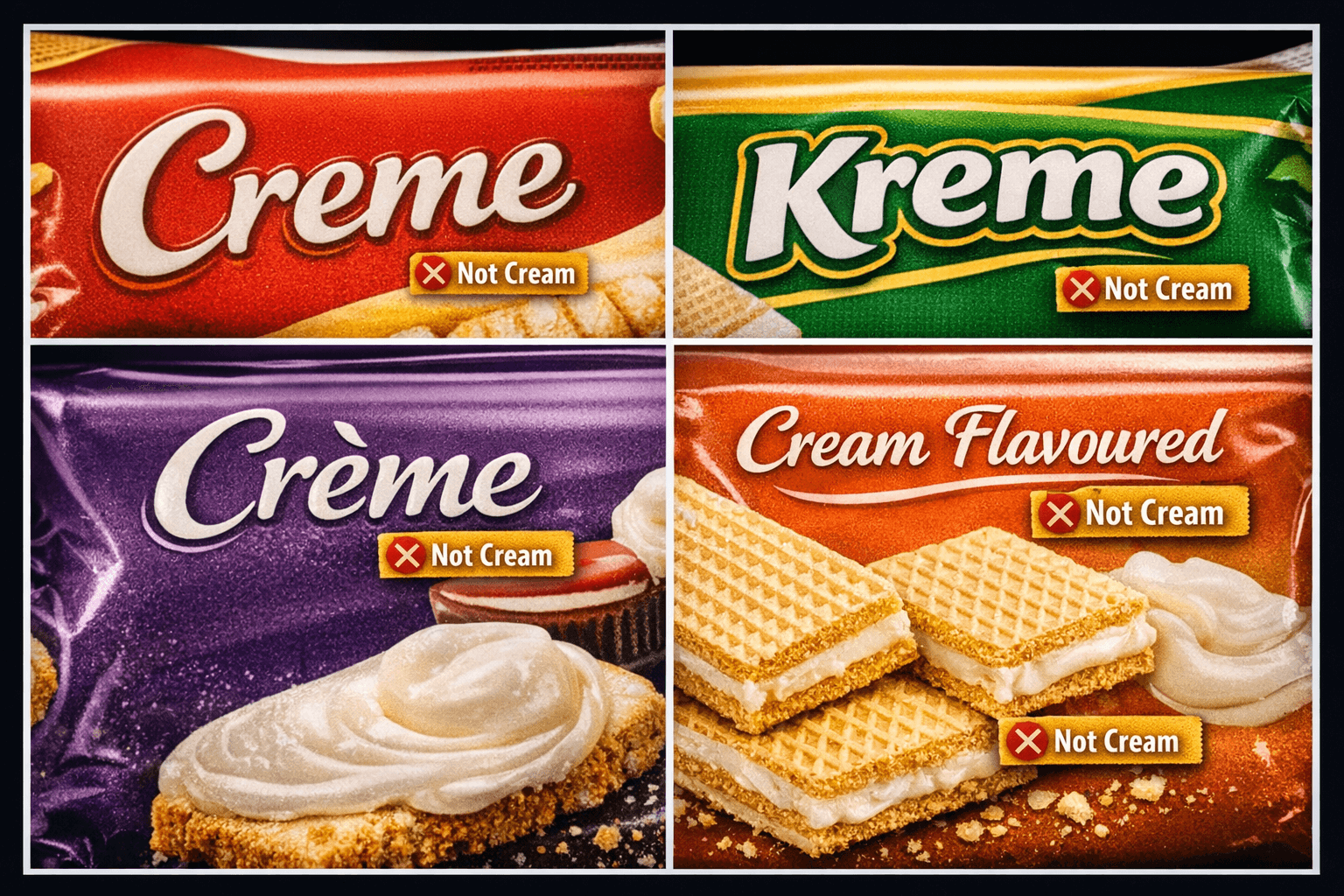
Some brands go even further:
- "Kreme" — An intentionally casual, phonetic spelling.
- "Crème" — Adding an accent makes it look French and sophisticated, but it's still not legally "Cream."
- "Cream-flavoured filling" — Notice the word "flavoured." This means it tastes like cream (using artificial agents), but contains no actual cream.
- "Creamy" — An adjective describing the texture, not the content. Something can be "creamy" without containing any cream at all.
Each of these is a carefully tested, legally vetted phrase designed to make you think "dairy" without ever actually claiming it. It's not a mistake. It's not lazy copywriting. It's a deliberate, systematic deception that's been refined over decades.
Why Should You Care?
You might think: "So what? It tastes fine. What's the harm?"
The harm is in the ingredients, not the spelling.
Hydrogenated vegetable oils are the primary source of industrial trans-fats in the Indian diet. Trans-fats are the most universally condemned nutrient in modern nutrition science. They raise your LDL cholesterol (bad), lower your HDL cholesterol (good), increase inflammation, and are linked to a significantly higher risk of heart disease, Type 2 diabetes, and stroke. The WHO has called for a global elimination of industrial trans-fats by 2023 — a deadline that has passed with limited compliance in many countries, including India.
When you eat three or four "creme" biscuits with your afternoon tea — which, let's be honest, is a modest number — you're consuming roughly 3-5 grams of these hydrogenated fats. Do that daily for years, and the cumulative impact on your cardiovascular system is substantial.
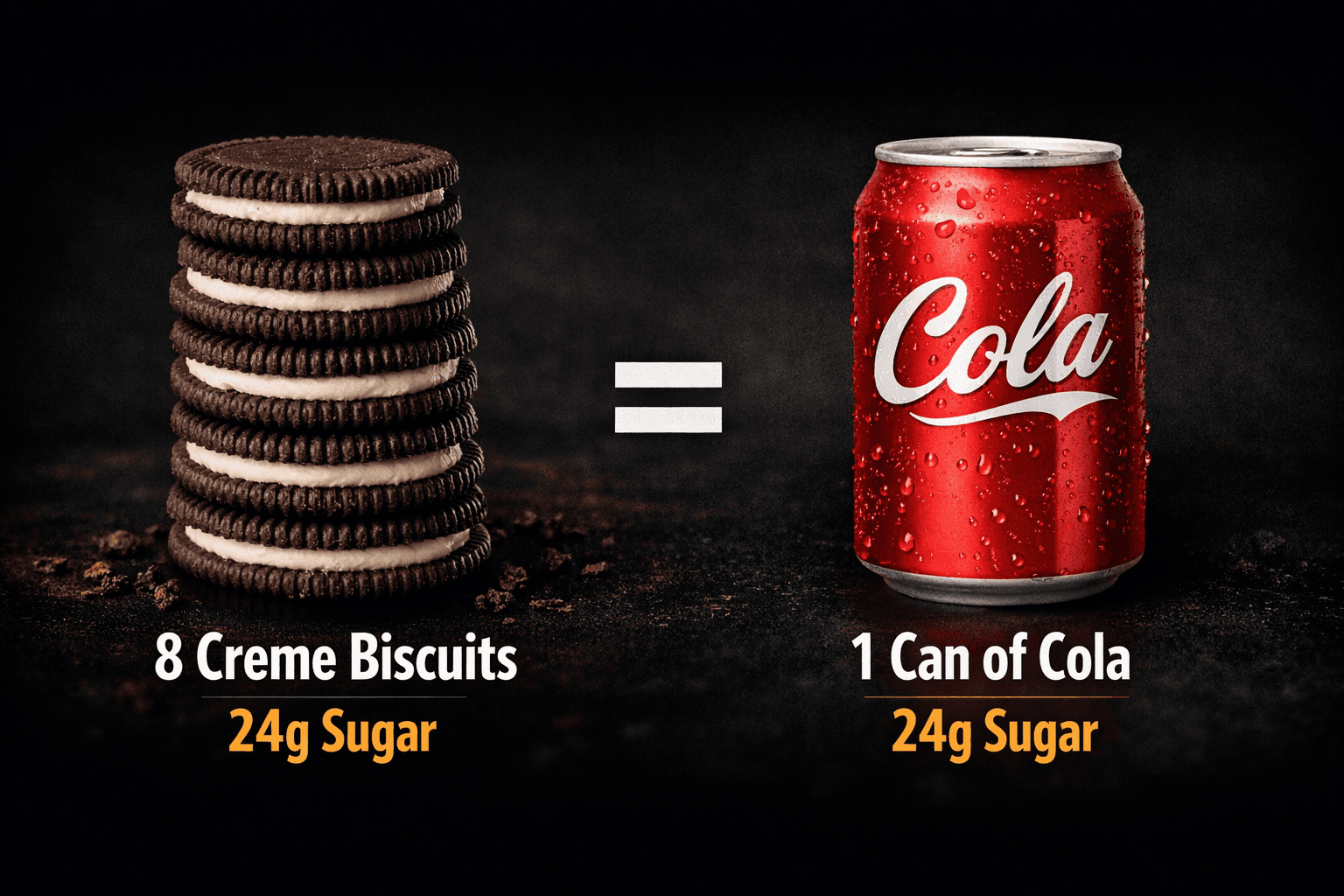
And then there's the sugar. A single "creme" biscuit contains approximately 3-5 grams of sugar. A sleeve of 8 biscuits — the quantity most people finish almost unconsciously — contains 24-40 grams of sugar. That's the equivalent of drinking a can of cola. But because it's a "biscuit with tea," we don't think of it as a sugary snack.
The combination of refined sugar and trans-fats is uniquely destructive. Sugar drives insulin resistance. Trans-fats drive arterial inflammation. Together, they accelerate metabolic damage far faster than either would alone.
How to Protect Yourself
The answer isn't necessarily to stop eating biscuits forever. It's to become a better reader.
Step 1: Flip the packet.
Always read the ingredient list on the back, not the marketing on the front. If the first three ingredients are some combination of Refined Flour, Sugar, and Edible Vegetable Oil — you know what you're holding.
Step 2: Look for "Cream" — the real word.
If the product uses the actual word "Cream" (not Creme, Kreme, or Creamy), check if "Milk Solids" or "Milk Fat" appears in the ingredient list. If it does, there's at least some real dairy in it. If it doesn't, the company is likely violating labeling regulations, and you should be doubly skeptical.
Step 3: Check the trans-fat declaration.
Indian food labeling laws allow companies to declare trans-fat as "0g" if the amount per serving is below 0.2g. But if the serving size is defined as a single biscuit (which it often is), and you eat 8, you could still be consuming well over a gram of trans-fat. Always multiply by the number you actually eat.
Step 4: Choose alternatives consciously.
If you want something sweet with your tea, consider options where you can see and understand every ingredient: a small piece of dark chocolate, a homemade ladoo made with jaggery and nuts, or even a single piece of fresh fruit.
The next time someone offers you a "cream" biscuit, look at the packet. Find the word. It won't say Cream. It will say Creme.
And now you know why.

Reading Time
10 min read