Hostel Hack: Iron
A ₹500 Dorm-Room Strategy to Beat Anemia
Hostel life is a crash course in independence.
It teaches you how to manage deadlines, deal with messy roommates, survive on limited sleep, and stretch a small monthly budget further than you ever thought possible.
But it also quietly creates a nutrition problem that affects thousands of students across India: iron deficiency.
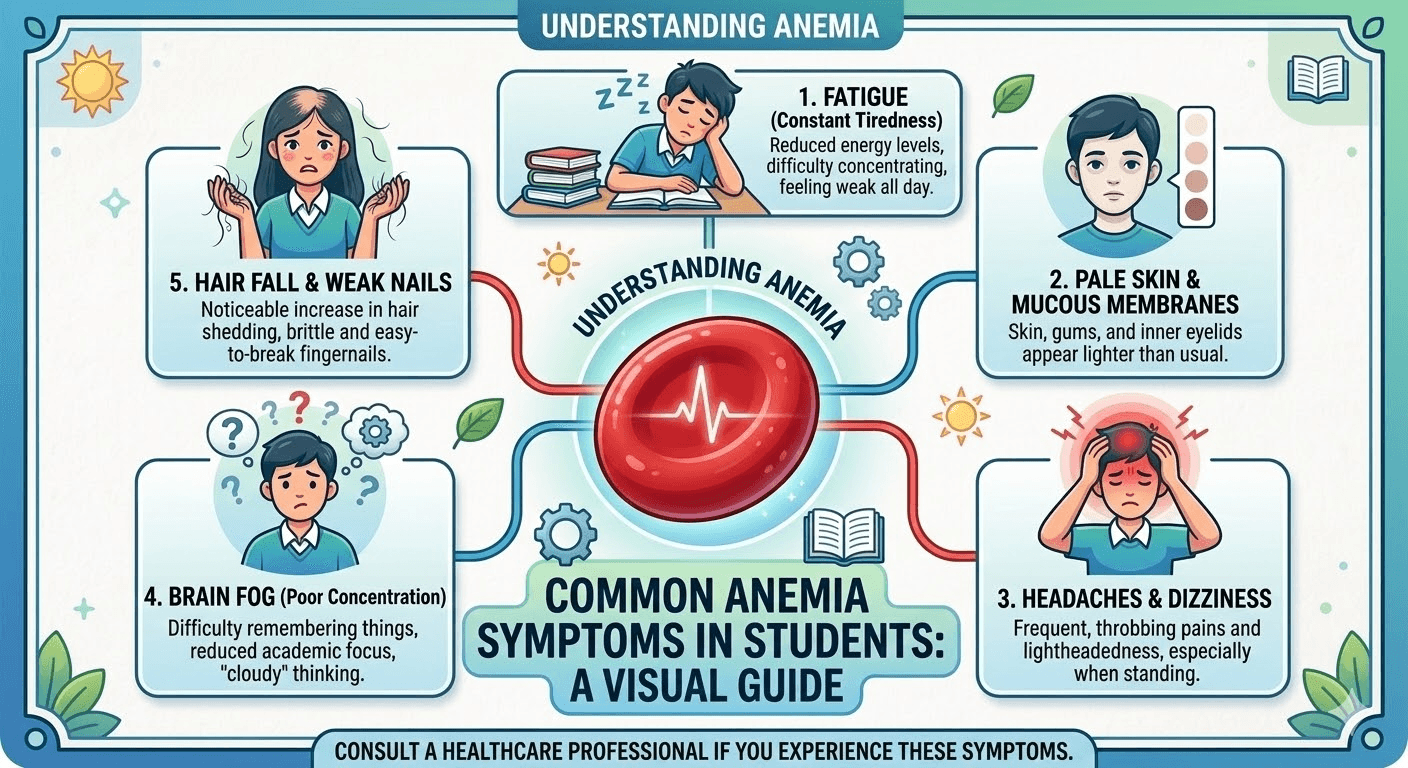
You may recognize the symptoms without realizing the cause:
Constant fatigue even after sleeping
Difficulty concentrating in lectures
Headaches that show up during study sessions
Feeling unusually cold
Sudden hair fall
Many students assume this is just the normal cost of college life — too many assignments, too little sleep, and too much chai.
But for a surprising number of hostel residents, the real issue is anemia, a condition where the body lacks enough healthy red blood cells to carry oxygen efficiently.
India already has one of the highest anemia rates in the world, and students living away from home often make the problem worse with irregular meals and nutrient-poor snacks.
The encouraging news is that improving iron intake does not require expensive supplements or complicated cooking.
Sometimes the solution fits on a small hostel table and costs less than ₹500 a month.
Why Hostel Life Creates Iron Deficiency
Iron is a mineral that the body uses to produce hemoglobin, the protein responsible for transporting oxygen through the bloodstream.
When iron intake drops too low, the body cannot produce enough healthy red blood cells. Oxygen delivery slows down, and energy levels begin to fall.
For college students, several daily habits quietly reduce iron intake.
Irregular Meal Patterns
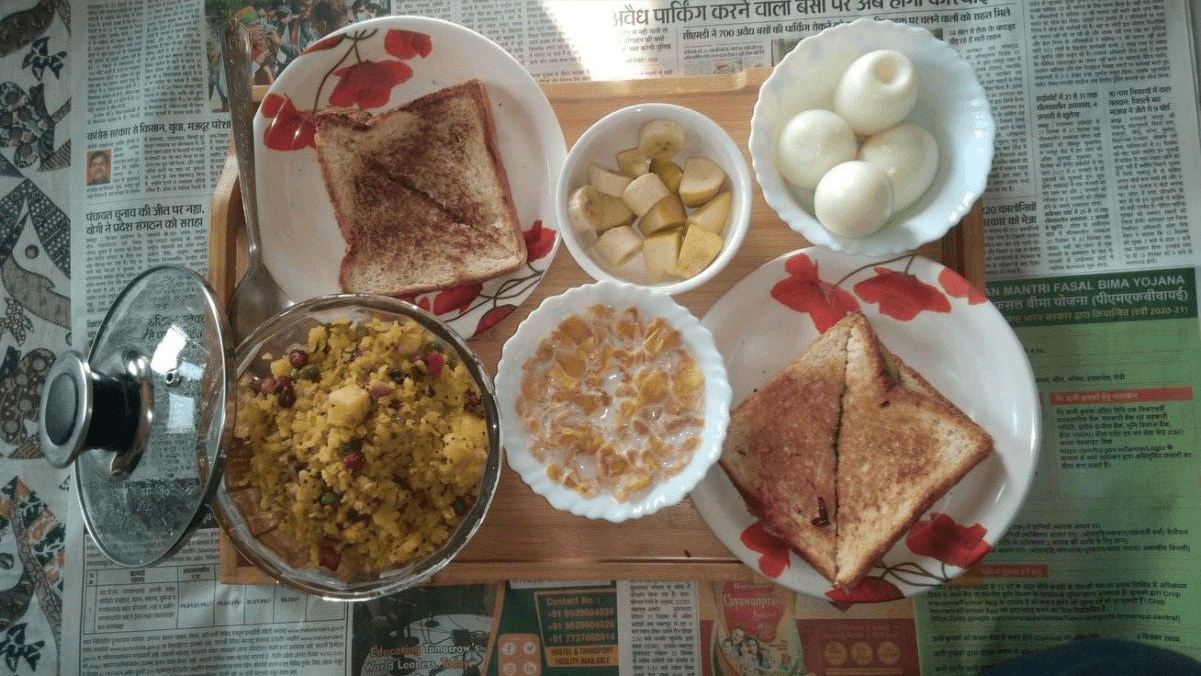
Many students skip breakfast because morning classes start early. Lunch might be rushed between lectures, and dinner depends entirely on the hostel mess menu.
Meals become inconsistent, and nutrient intake suffers.
Heavy Reliance on Refined Foods
Common hostel survival foods include:
instant noodles
biscuits
packaged namkeen
white bread sandwiches
These foods provide calories but almost no meaningful iron.
Tea Culture
Tea is a beloved companion of hostel life. Morning chai, evening chai, late-night chai during exam season.
But tea contains compounds called tannins, which can significantly reduce the body’s ability to absorb iron when consumed alongside meals.
Higher Iron Needs for Women
Young women have naturally higher iron requirements due to menstrual blood loss. Without sufficient dietary iron, deficiency develops quickly.
Together, these factors make anemia surprisingly common among college students.
The Two Types of Iron in Food
Understanding iron nutrition starts with recognizing that not all iron behaves the same way in the body.
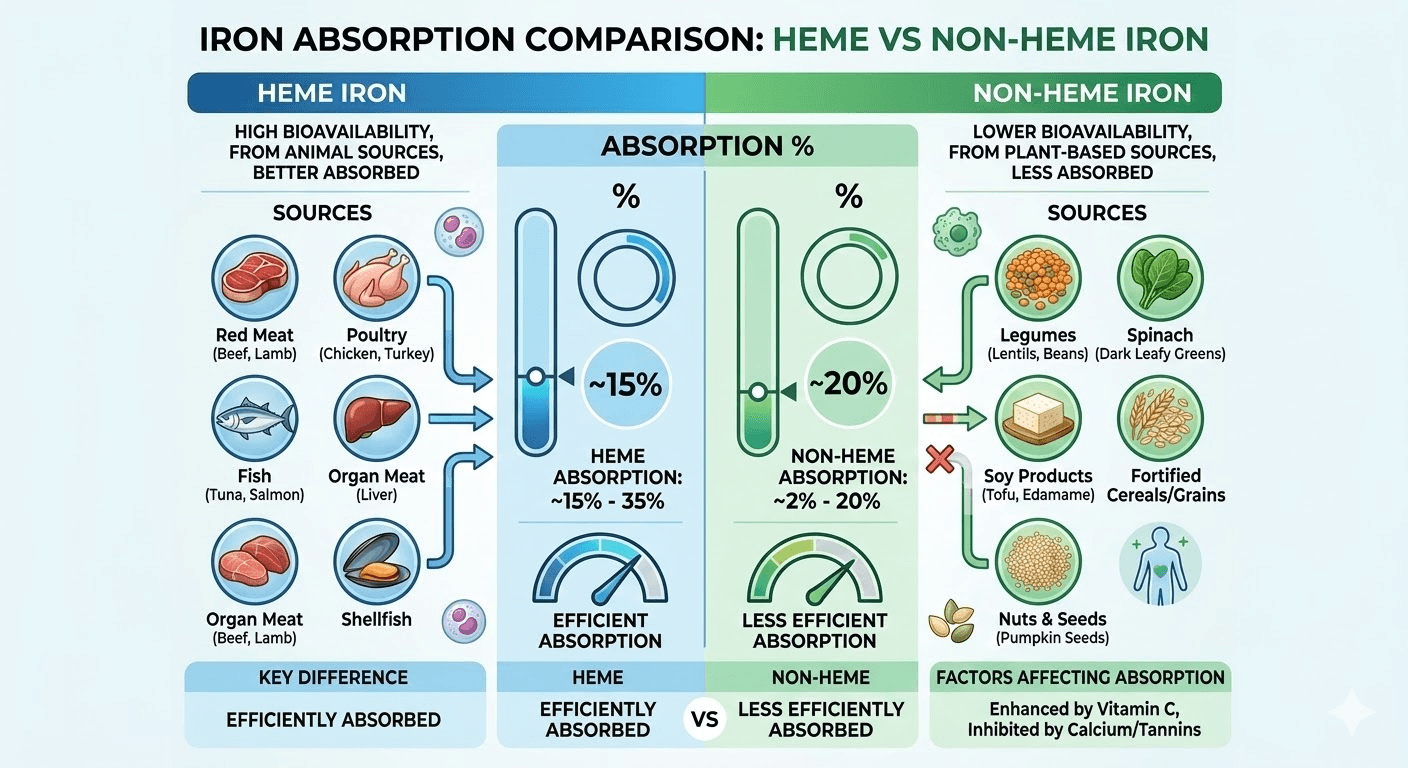
Nutrition science divides dietary iron into two categories.
Heme Iron
This type is found in animal-based foods such as meat, fish, and poultry.
Heme iron is highly bioavailable, meaning the body absorbs it easily. Absorption rates typically range between 15–35%.
Non-Heme Iron
Plant foods contain non-heme iron, which is significantly harder for the body to absorb. Absorption rates often fall between 2–10%.
Most Indian students — particularly vegetarians — depend almost entirely on non-heme iron sources.
This means that absorption strategies are just as important as the foods themselves.
The 5-Minute Hostel Iron Bowl
Cooking elaborate meals in a hostel is rarely practical.
The goal is simplicity — foods that require almost no preparation and minimal equipment.
One surprisingly effective iron-supporting snack can be made in under five minutes.
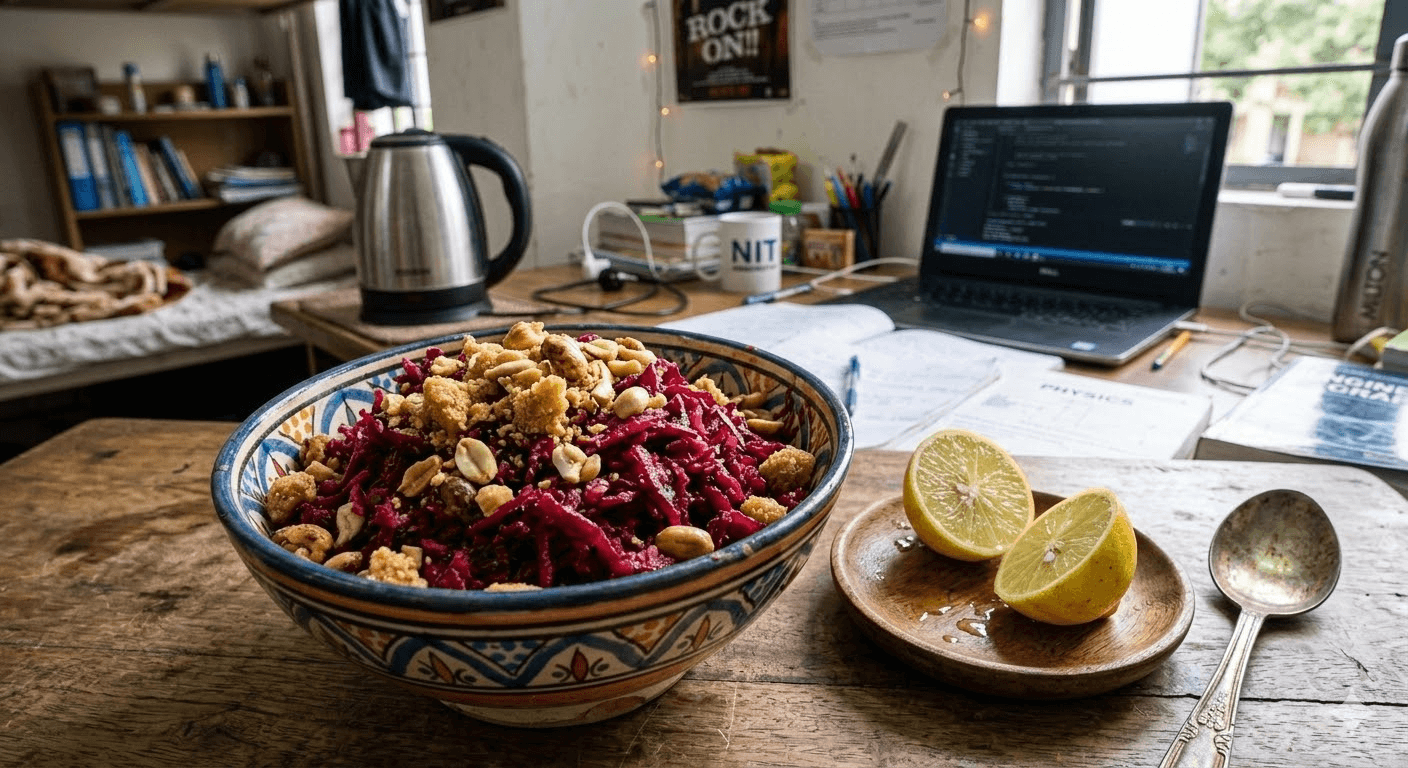
The Beetroot + Jaggery Bowl
Ingredients:
1 small beetroot
1 tablespoon jaggery (gud)
A handful of roasted peanuts
Half a lemon
Preparation:
Grate or thinly slice the beetroot.
Mix in small pieces of jaggery.
Add roasted peanuts for protein and calories.
Squeeze fresh lemon juice over the mixture.
Why this combination works:
Beetroot provides iron and folate, both important for red blood cell production.
Jaggery contains small but meaningful amounts of iron compared to refined sugar.
Peanuts add protein and healthy fats, improving satiety.
Lemon juice supplies vitamin C, which dramatically improves the absorption of non-heme iron.
The result is a snack that is simple, cheap, and surprisingly effective when eaten consistently.
The ₹500 Monthly Grocery List
Healthy eating often feels expensive to students.
But iron-supportive foods can be surprisingly affordable when chosen carefully.
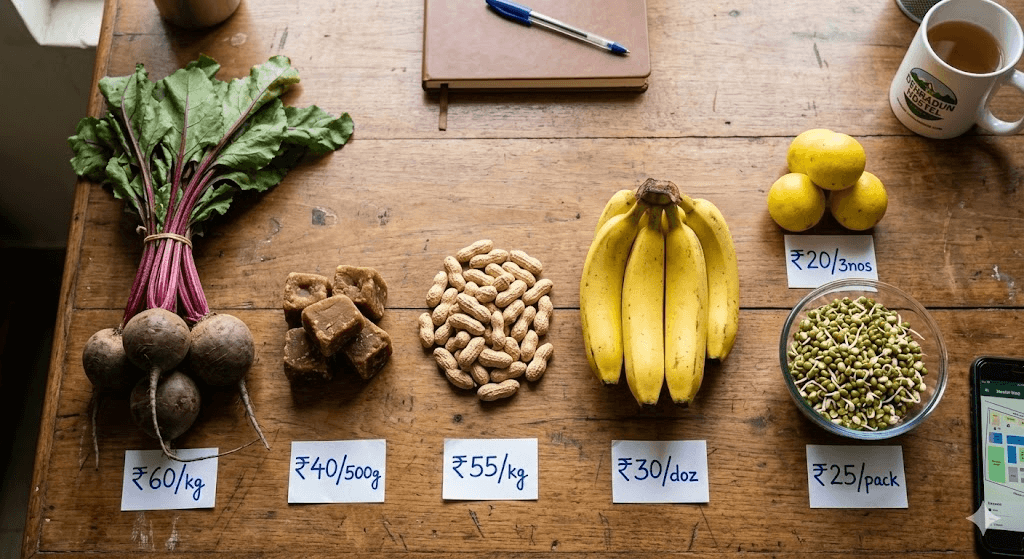
A simple monthly grocery kit might look like this:
Item | Quantity | Approx Cost |
Beetroot | 2–3 kg | ₹120 |
Jaggery | 500 g | ₹60 |
Roasted peanuts | 500 g | ₹80 |
Bananas | 24 | ₹120 |
Lemons | 10–12 | ₹70 |
Sprouted moong | ~1 kg monthly | ₹50 |
Total: ₹450–₹500
All these foods are easy to store and require minimal preparation.
Bananas provide energy between classes. Sprouted moong adds extra iron and protein. Lemons improve absorption.
Even students on tight budgets can manage this system.
The Absorption Trick Most People Miss
Eating iron-rich foods is only half the equation.
How the body absorbs that iron is just as important.
Two simple habits dramatically improve iron utilization.
Pair Iron With Vitamin C
Vitamin C can increase non-heme iron absorption two to three times.
Adding lemon juice, tomatoes, oranges, or guava alongside iron-rich foods makes a measurable difference.
Avoid Tea During Meals
Tea and coffee contain polyphenols that bind to iron and prevent absorption.
The easiest fix is timing.
Drink tea one hour before or after meals, rather than alongside them.
For hostel students who drink multiple cups of chai every day, this small adjustment can significantly improve iron intake without changing the diet itself.
The Long Game
Hostel life will never offer perfect nutrition.
Mess menus change daily. Schedules are chaotic. Budgets are tight.
But health rarely depends on perfection.
It depends on small systems repeated consistently.
A five-minute snack eaten every day can slowly rebuild iron levels.
A ₹500 grocery list can outperform expensive packaged health foods.
A squeeze of lemon can double the value of the iron already on your plate.
Sometimes the difference between constant exhaustion and steady energy isn't a miracle supplement or complicated diet.
Sometimes it's a beetroot, a piece of jaggery, and the decision to spend five minutes taking care of your body — even during the busiest semester of your life.

Reading Time
10 min read