
Late Night Fuel
Smarter 2 AM Snacks That Power Your Brain Without the Crash
Every college student eventually experiences it.
The 2 AM study session.
Your room is quiet except for the hum of a ceiling fan. Half the hostel floor is asleep, but a few lights remain on — the rooms where exams are close enough to cause panic.
Your brain is trying to absorb three weeks of lectures in a single night.
Your eyes are tired. Your focus drifts every few minutes. Your stomach starts asking for something — anything — that might keep you awake.
So you reach for the most common late-night survival food in Indian hostels:
Instant noodles.
They’re fast, cheap, comforting, and require almost no effort.
But about 30 minutes after finishing them, something strange happens.
Your energy spikes briefly… and then crashes.
Your brain becomes foggy. Your eyes get heavier. Concentration disappears right when you need it most.
What happened?
The answer lies in how different foods affect brain energy and blood sugar, especially during long study sessions.
The right late-night snack can stabilize focus for hours.
The wrong one can sabotage your brain within minutes.
Why Your Brain Needs the Right Fuel
The human brain is surprisingly energy-hungry.
Despite weighing only about 2% of total body weight, the brain consumes nearly 20% of the body's daily energy supply.
During intense mental activity — reading, memorizing, solving problems — this demand increases even further.
Unlike muscles, the brain cannot store much fuel.
It depends almost entirely on a steady supply of glucose circulating in the bloodstream.
This means your concentration during study sessions is heavily influenced by how stable your blood sugar levels remain.
When blood sugar rises gradually and stays stable, the brain receives consistent energy.
But when blood sugar spikes quickly and then falls just as fast, cognitive performance suffers.
And this is exactly what happens with most common exam snacks.
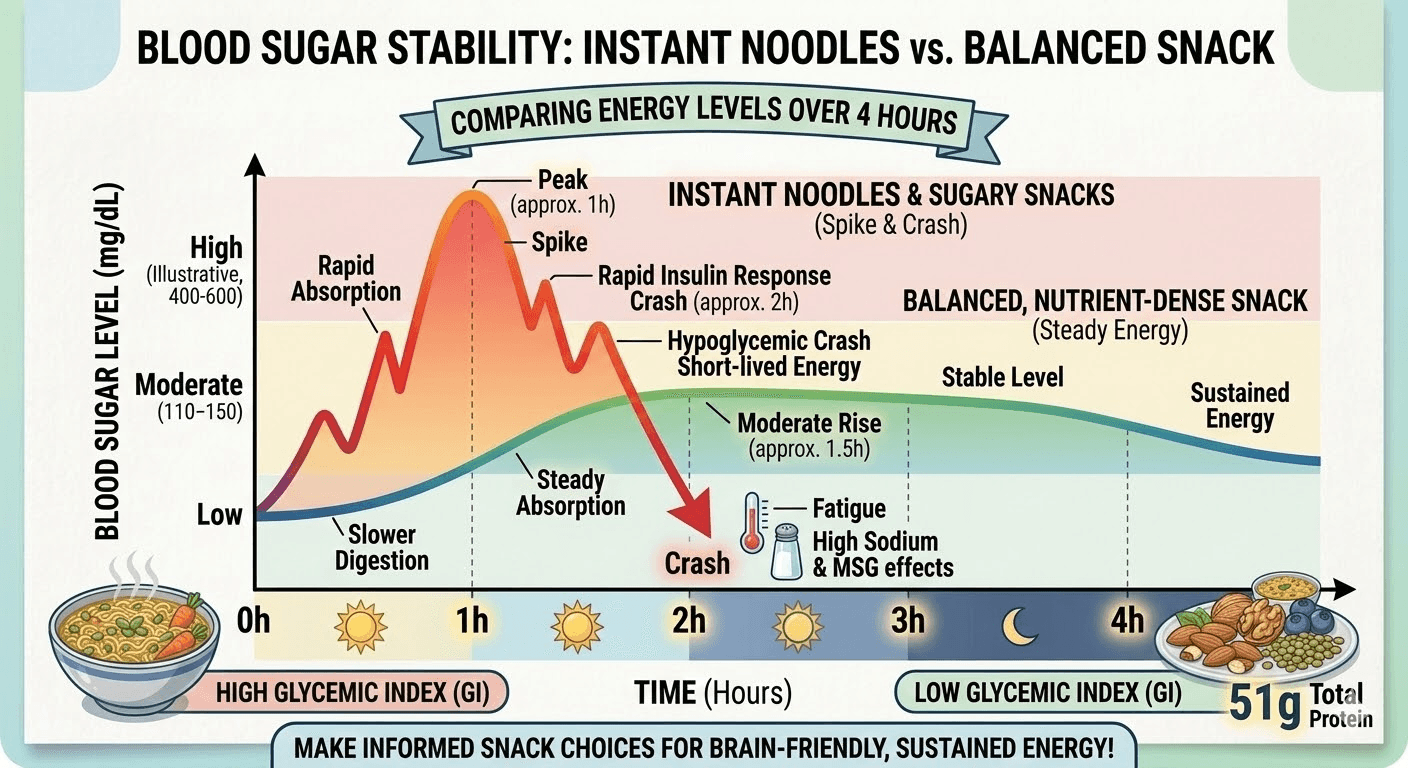
The Problem With Instant Noodles
Instant noodles feel satisfying in the moment.
They’re warm, salty, and filling — exactly what a tired student craves.
But nutritionally, they are one of the worst possible foods for sustained concentration.
A typical instant noodle packet contains:
Refined flour (maida)
Large amounts of sodium
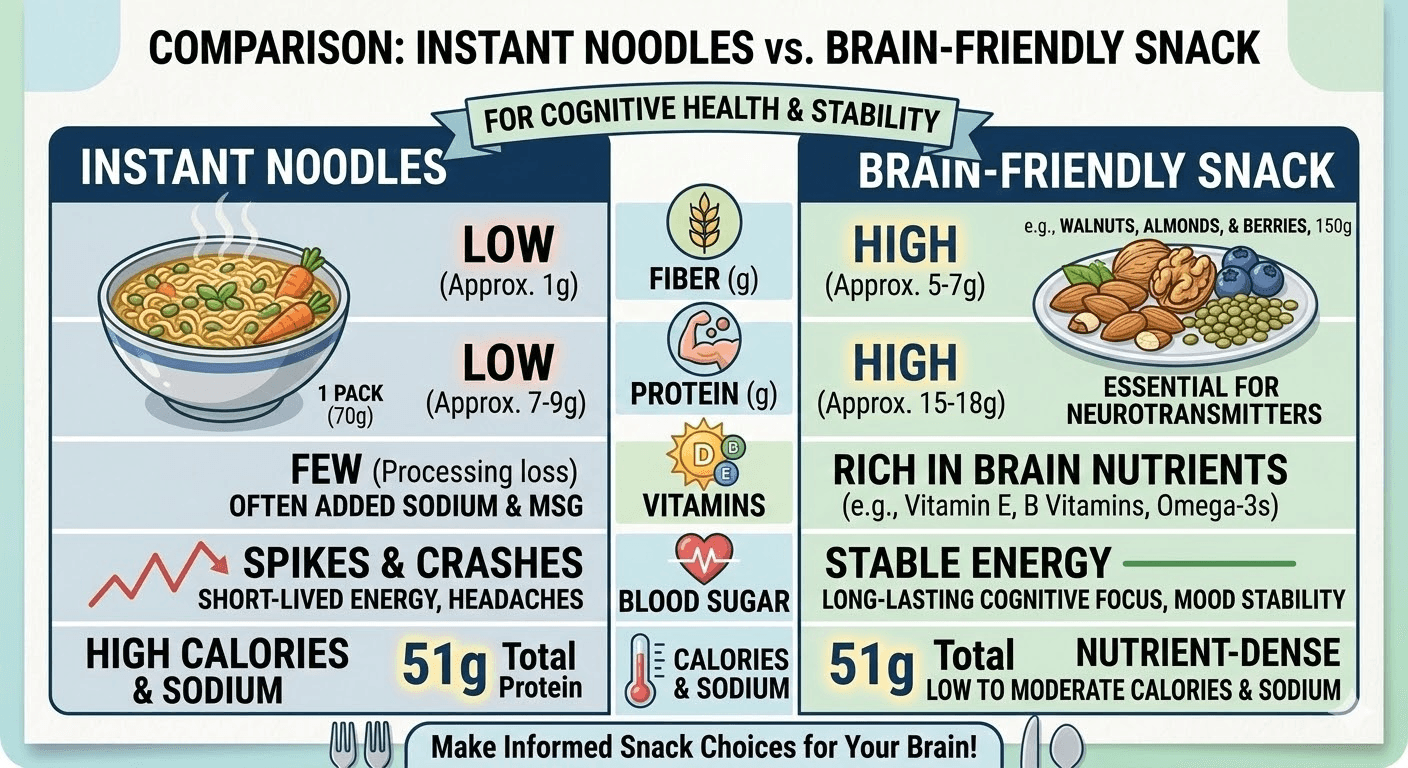
Low fiber
Minimal protein
Almost no vitamins or minerals
Refined flour digests extremely quickly, causing rapid spikes in blood sugar.
The body responds by releasing insulin to bring glucose levels down.
The result is a sharp energy crash roughly 30–60 minutes later.
This crash often brings:
sleepiness
reduced concentration
irritability
cravings for more sugar
In the middle of an exam preparation session, this is the last thing your brain needs.
The Brain Chemistry of Studying
When students are studying intensively, the brain relies heavily on several key neurotransmitters:
Acetylcholine – essential for memory formation
Dopamine – drives motivation and alertness
Serotonin – stabilizes mood and focus
Producing these chemicals requires specific nutrients, particularly:
amino acids from protein
healthy fats
vitamins such as B6 and B12
minerals like magnesium
Ultra-processed snacks like instant noodles provide almost none of these.
This means that while noodles fill the stomach, they contribute very little to the chemical processes required for learning and memory.
In contrast, snacks containing protein, healthy fats, and fiber support neurotransmitter production and help maintain stable brain performance.
The Perfect 2 AM Snack Formula
Instead of relying on random snack choices, students can use a simple formula for brain-friendly late-night fuel.
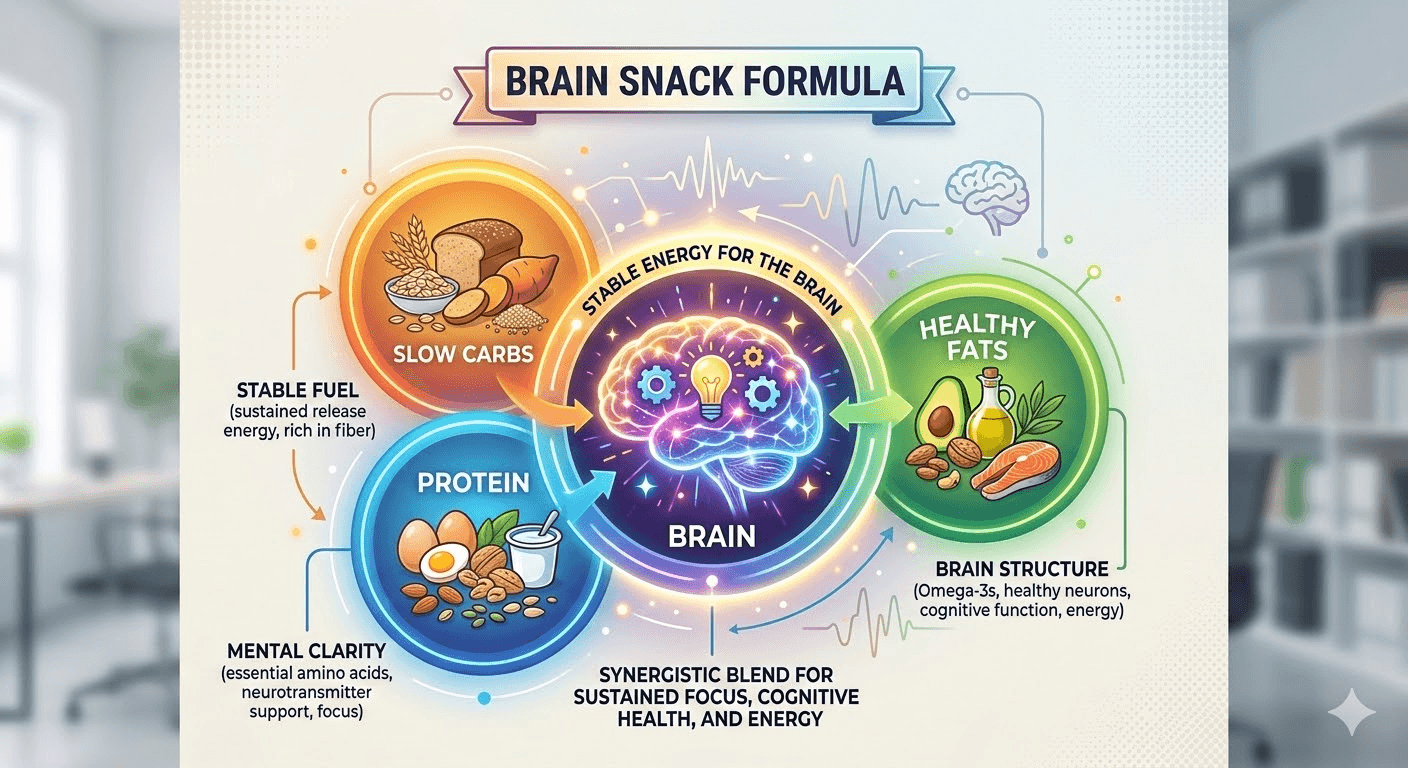
A balanced snack should include three components:
Slow carbohydrates
Protein
Healthy fats
Each plays a specific role.
Slow carbohydrates release glucose gradually, preventing energy crashes.
Protein provides amino acids needed for neurotransmitter production.
Healthy fats support brain cell function and prolong satiety.
Together, they create a stable energy supply for the brain.
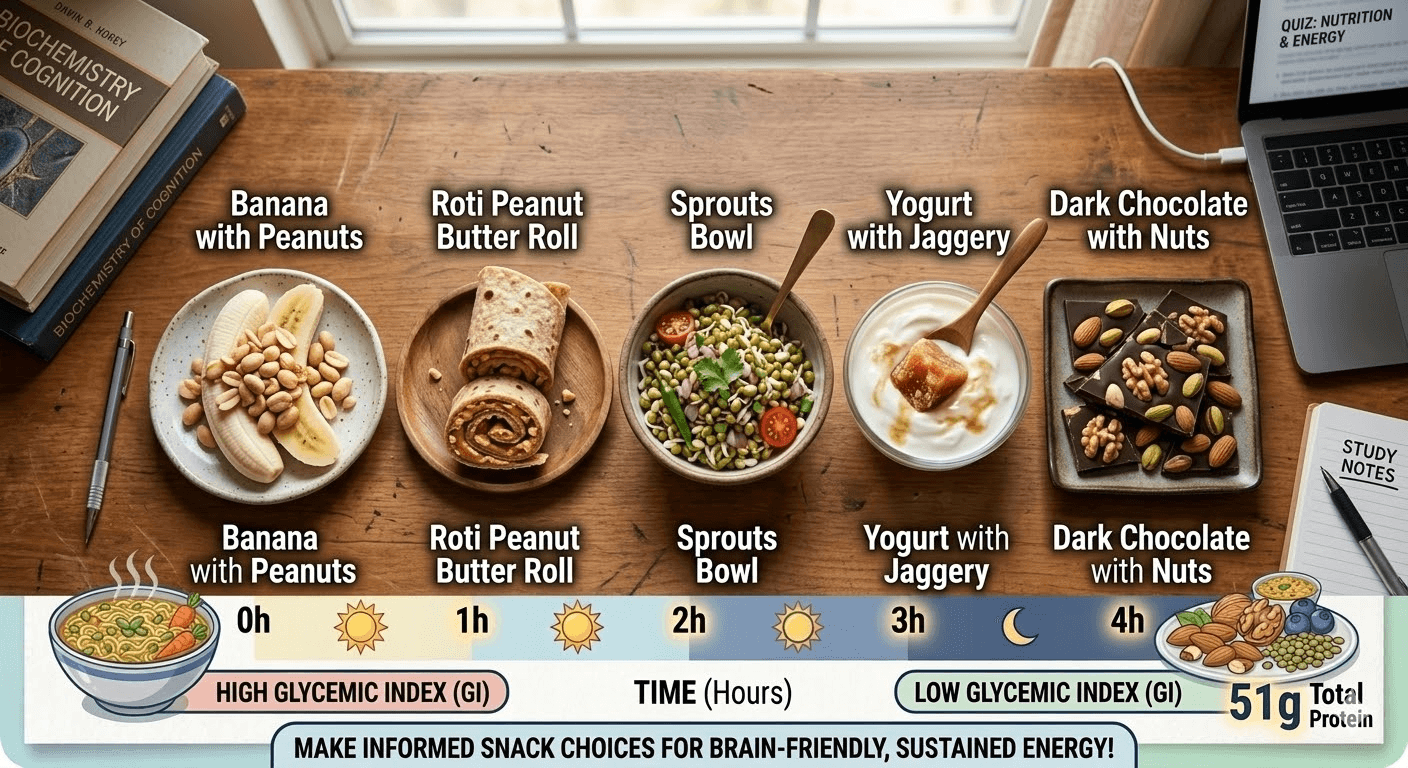
Five Hostel-Friendly Brain Snacks
These snacks require minimal preparation and are easy to store in a hostel room.
1. Banana + Peanut Combo
One banana paired with a handful of roasted peanuts provides:
steady carbohydrates
protein
magnesium
potassium
This combination stabilizes blood sugar and supports muscle relaxation during stressful study sessions.
Preparation time: 10 seconds
2. Peanut Butter Roti Roll
Take a leftover roti from dinner and spread peanut butter inside.
Roll it up and eat like a wrap.
This simple snack provides:
complex carbs from whole wheat
protein and fats from peanuts
It keeps energy stable much longer than instant noodles.
3. Sprouts with Lemon
Sprouted moong is rich in protein, iron, and B vitamins.
Add a squeeze of lemon to improve nutrient absorption.
Sprouts are one of the most nutrient-dense foods available to students.
4. Yogurt with Jaggery
Curd provides protein and beneficial bacteria that support gut health.
A small piece of jaggery adds natural sweetness and iron.
Together they create a balanced snack that is light yet nourishing.
5. Dark Chocolate + Nuts
A small piece of dark chocolate (70% cocoa or higher) paired with almonds or peanuts can improve focus.
Dark chocolate contains small amounts of caffeine and antioxidants that enhance alertness without the crash of sugary snacks.
The Hydration Mistake Students Make
During intense study sessions, many students rely heavily on tea or coffee.
While moderate caffeine can improve alertness, excessive caffeine causes problems:
dehydration
jitteriness
disrupted sleep
anxiety
Dehydration alone can reduce cognitive performance by 10–15%.
Students often mistake dehydration fatigue for hunger.
Drinking a glass of water every hour during study sessions helps maintain focus far better than repeated cups of coffee.
The Sleep Factor Nobody Wants to Hear
There is an uncomfortable truth about all-night study sessions:
The brain consolidates memory during sleep.
Without sleep, the information studied may never properly transfer from short-term memory to long-term storage.
This means that while late-night snacks can support temporary focus, they cannot replace the biological importance of sleep.
Even a 90-minute nap cycle before an exam can significantly improve recall.
The Long Game
Late-night studying will always be part of student life.
Deadlines pile up. Exams approach faster than expected. Panic motivates productivity.
But the food you eat during those critical hours determines how well your brain performs.
Instant noodles may feel like the easiest option at 2 AM.
But they offer little more than temporary comfort.
A banana and peanuts. A roti roll with peanut butter. A bowl of sprouts with lemon.
These simple foods provide something far more valuable during exam week:
steady energy, clearer thinking, and a brain that stays awake long enough to finish the chapter.
The next time the clock hits 2 AM and your stomach asks for fuel, remember that your brain isn't asking for junk.
It's asking for energy that lasts until the exam ends.

Reading Time
20 min read