The Stevia Myth
The “Zero-Calorie” Sweetener That Isn’t What You Think
The modern health-conscious consumer has learned one lesson well: avoid sugar.
So we look for alternatives. The supermarket shelves are full of them — little green packets promising “Natural Stevia,” “Zero Calories,” “Diabetic Friendly,” and “No Sugar.”
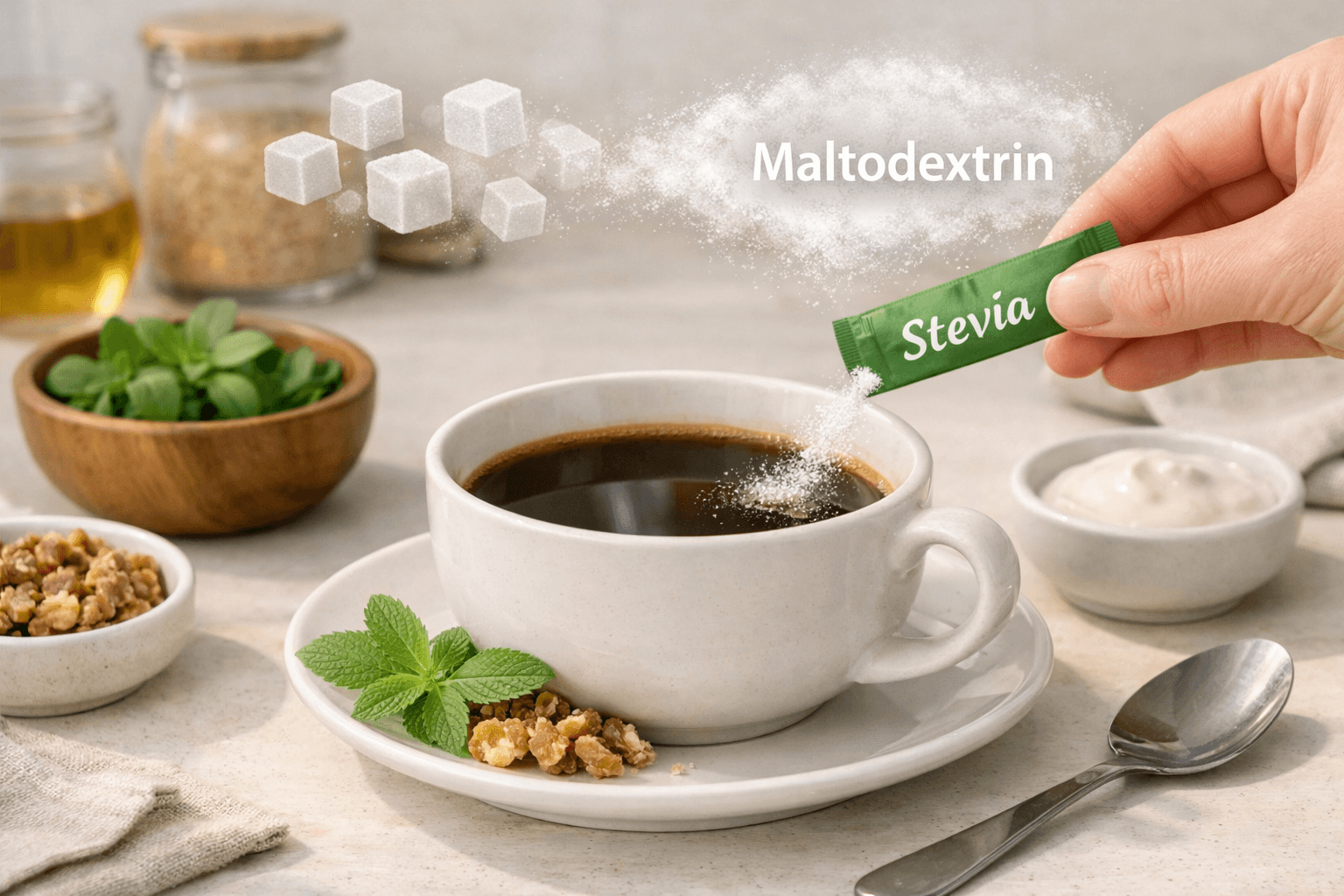
It feels like a smart swap. Instead of a teaspoon of sugar in your tea or coffee, you tear open a stevia sachet and sprinkle in a small cloud of white powder. No calories. No guilt. Problem solved.
Except… that white powder is rarely stevia.
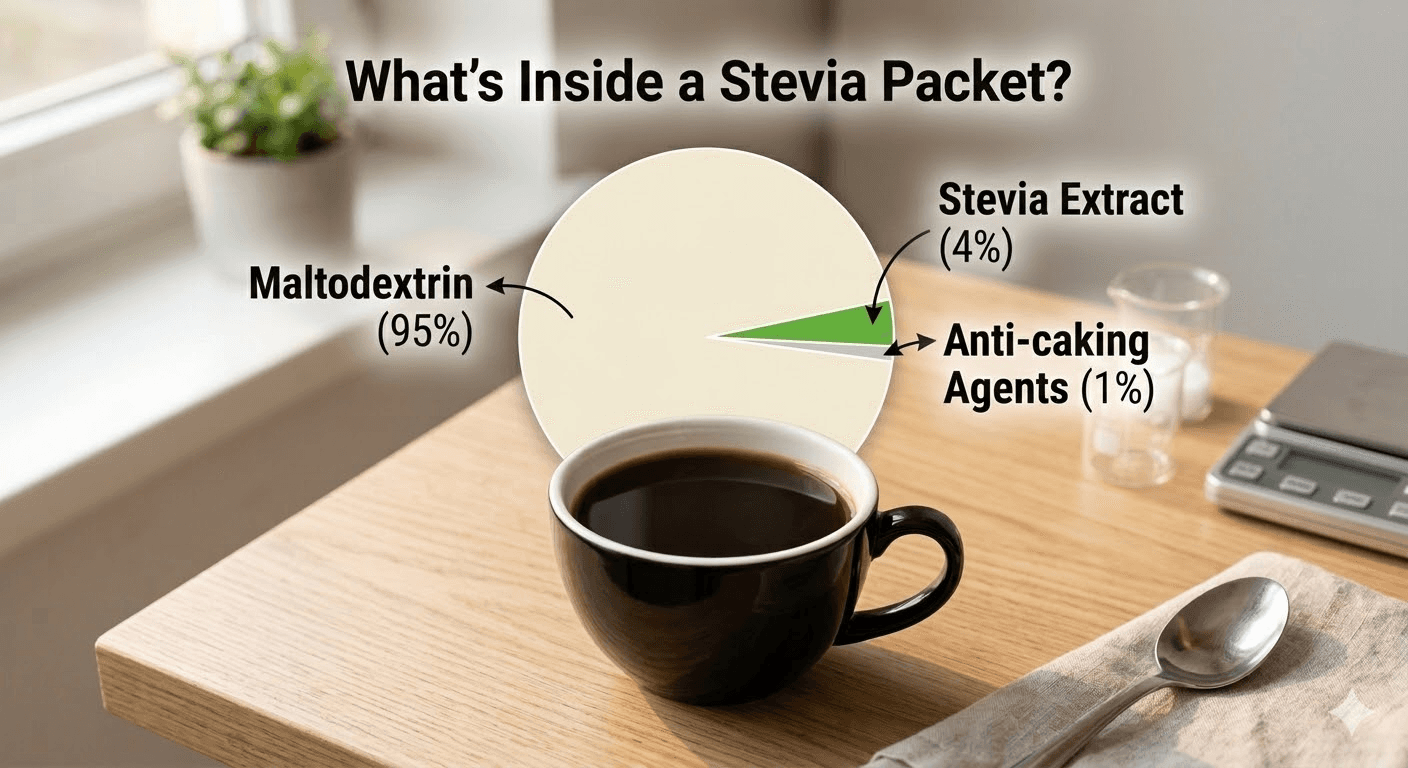
In fact, in many popular tabletop sweeteners sold across India and globally, stevia makes up less than 5% of the packet.
The other 95% is usually Maltodextrin — a highly processed starch with a glycemic index higher than table sugar.
Which means the product marketed as a blood-sugar-friendly sweetener may actually spike glucose faster than the sugar you were trying to avoid.
Welcome to the Stevia Myth.
What Real Stevia Actually Is
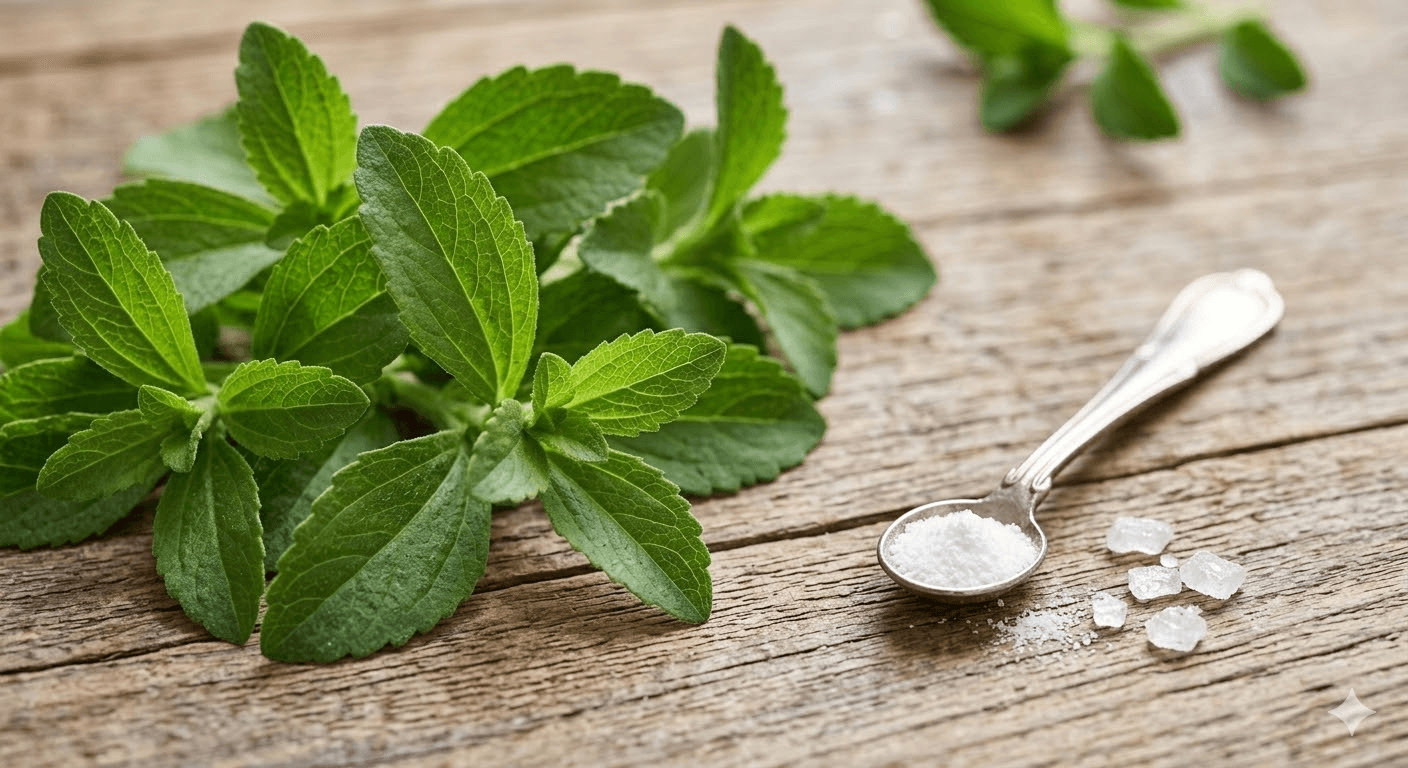
Stevia itself is a plant — Stevia rebaudiana, native to South America. The leaves of this plant contain compounds called steviol glycosides, which are intensely sweet.
These molecules are remarkable because they are 200–300 times sweeter than sugar while contributing virtually zero calories.
A tiny quantity can sweeten an entire drink.
In its pure form, stevia extract looks nothing like the white powder you see in sachets. It is usually an extremely concentrated crystalline extract or liquid.
And that’s precisely the problem.
Because stevia is so powerful, the amount needed to sweeten a cup of tea is so tiny that it would be nearly impossible to measure conveniently.
So manufacturers dilute it.
The 95% Ingredient Nobody Talks About
When you open a stevia sachet, the powder you see is not mostly stevia.
It is usually Maltodextrin.
Maltodextrin is a processed carbohydrate derived from corn, rice, wheat, or potato starch. Through enzymatic processing, long starch chains are broken down into shorter molecules, creating a fine white powder that dissolves easily in liquids.
Food manufacturers love maltodextrin because it is:
Cheap
Flavorless
Easy to mix
Excellent at adding bulk to tiny ingredients
In a typical stevia tabletop sweetener, the composition looks something like this:
Maltodextrin: 90–95%
Steviol glycosides: 1–5%
Anti-caking agents: trace amounts
The maltodextrin acts as a carrier, bulking up the tiny amount of stevia so the packet contains a measurable teaspoon-sized portion.
Without it, you’d be trying to measure a quantity of sweetener smaller than a grain of rice.
The Glycemic Shock
Here’s the twist most consumers never hear.
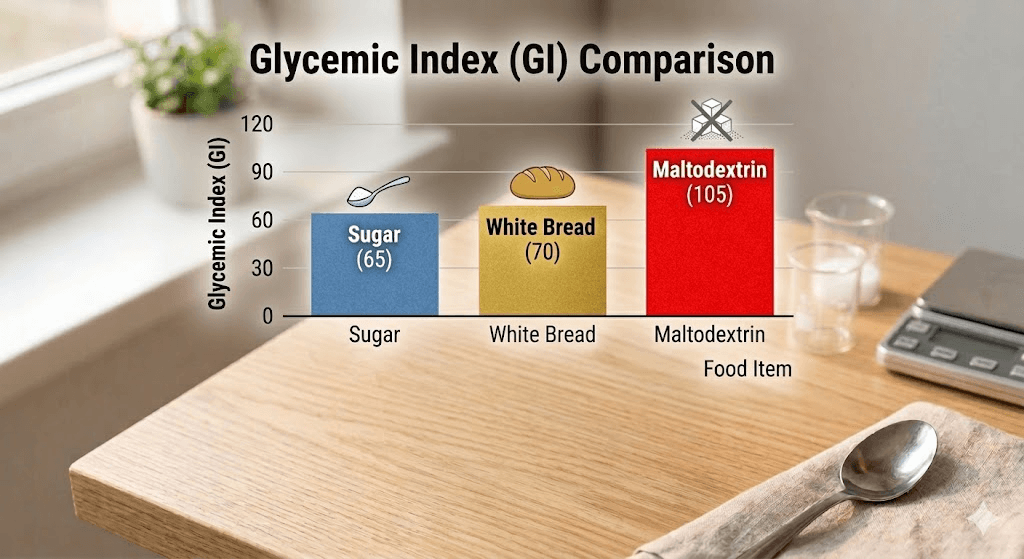
Maltodextrin has a glycemic index between 85 and 105, depending on the source.
For comparison:
Table sugar (sucrose): GI ~65
White bread: GI ~70
Maltodextrin: GI up to 105
The glycemic index measures how quickly a food raises blood glucose levels.
A higher number means a faster and sharper spike in blood sugar.
So while a stevia packet may contain very few calories, the carbohydrate it does contain is absorbed extremely rapidly.
This is why some people with diabetes notice unexpected glucose spikes even after switching from sugar to artificial sweetener sachets.
They replaced sugar with something that can be metabolically even faster.
The "Zero Calorie" Technicality
At this point, you might wonder how companies can legally claim “Zero Calories.”
The answer lies in a small but important labeling rule.
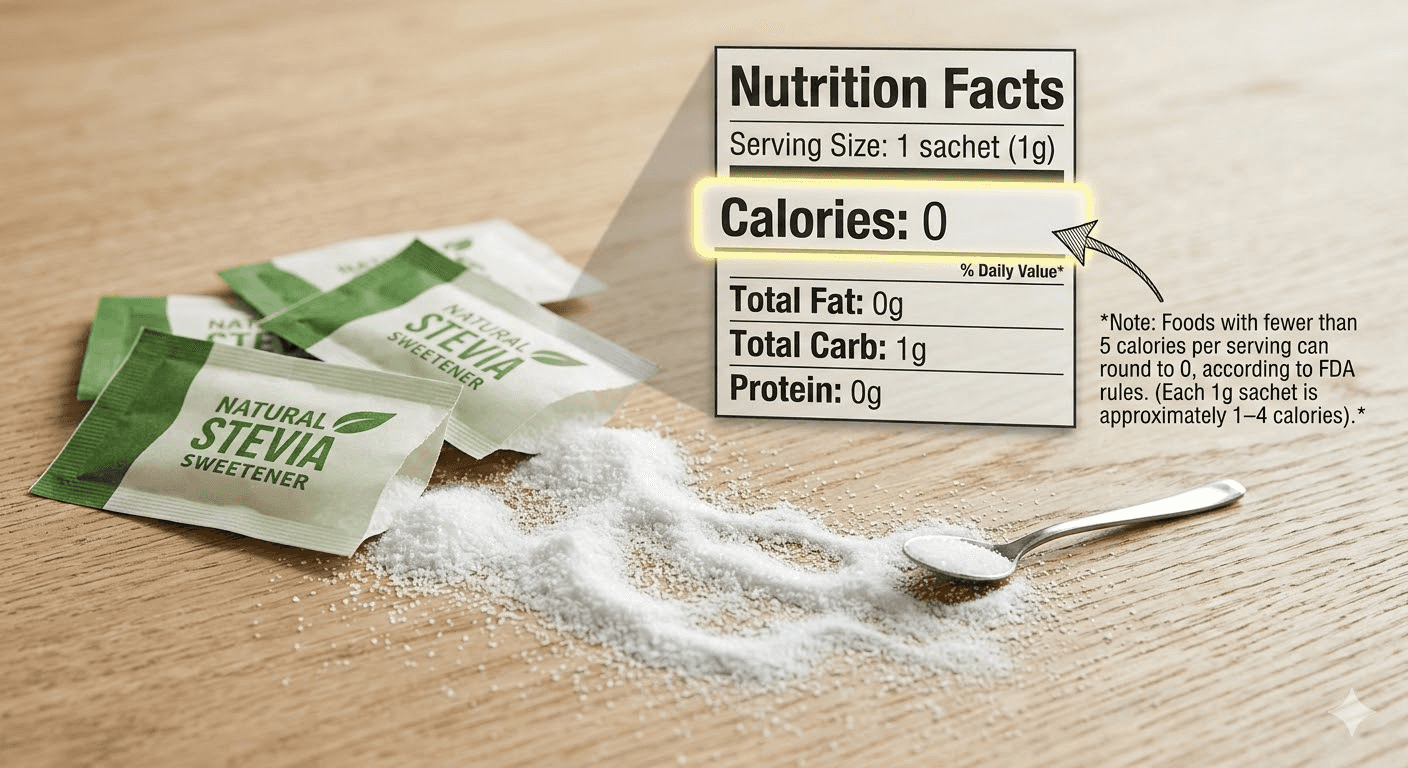
Food labeling regulations allow manufacturers to round down calorie counts when a serving contains fewer than 5 calories.
A single sweetener packet typically weighs around 1 gram.
That gram of maltodextrin might contain 3–4 calories.
Because it falls below the 5-calorie threshold, companies are allowed to label the packet as 0 calories.
Technically correct.
Practically misleading.
One packet may not matter much. But people rarely stop at one. Add several cups of tea, coffee, or dessert sweeteners throughout the day, and the “zero calorie” product quietly accumulates calories and fast-digesting carbohydrates.
How to Use Stevia the Right Way
The solution isn't necessarily to abandon stevia altogether. The plant itself is perfectly legitimate as a sweetener.
The key is understanding the difference between pure stevia and commercial tabletop blends.
Here’s how to navigate it:
1. Read the ingredient list carefully
If Maltodextrin or Dextrose appears as the first ingredient, the product is mostly filler.
2. Look for high-purity stevia extracts
Products labeled “Reb A 95%” or similar indicate a higher concentration of steviol glycosides.
3. Liquid stevia is often cleaner
Liquid drops typically require fewer fillers because they can be dosed in very small quantities.
4. Reduce sweetness gradually
The healthiest strategy may be the simplest: train your taste buds to need less sweetness overall. Over time, even tea without sugar becomes surprisingly enjoyable.
The Long Game
The story of stevia is a perfect example of how the food industry often operates.
Take a genuinely interesting ingredient — a natural sweet plant with zero calories — and transform it into a mass-market product by diluting it with cheap industrial fillers.
Then market the final result as a health solution.
The green packet looks reassuring. The word “natural” is printed on the front. And the number 0 sits proudly next to calories.
But like most processed food mysteries, the truth isn’t on the front of the box.
It’s in the ingredient list.
And once you know what to look for, you’ll never read those little packets the same way again.

Reading Time
7 min read