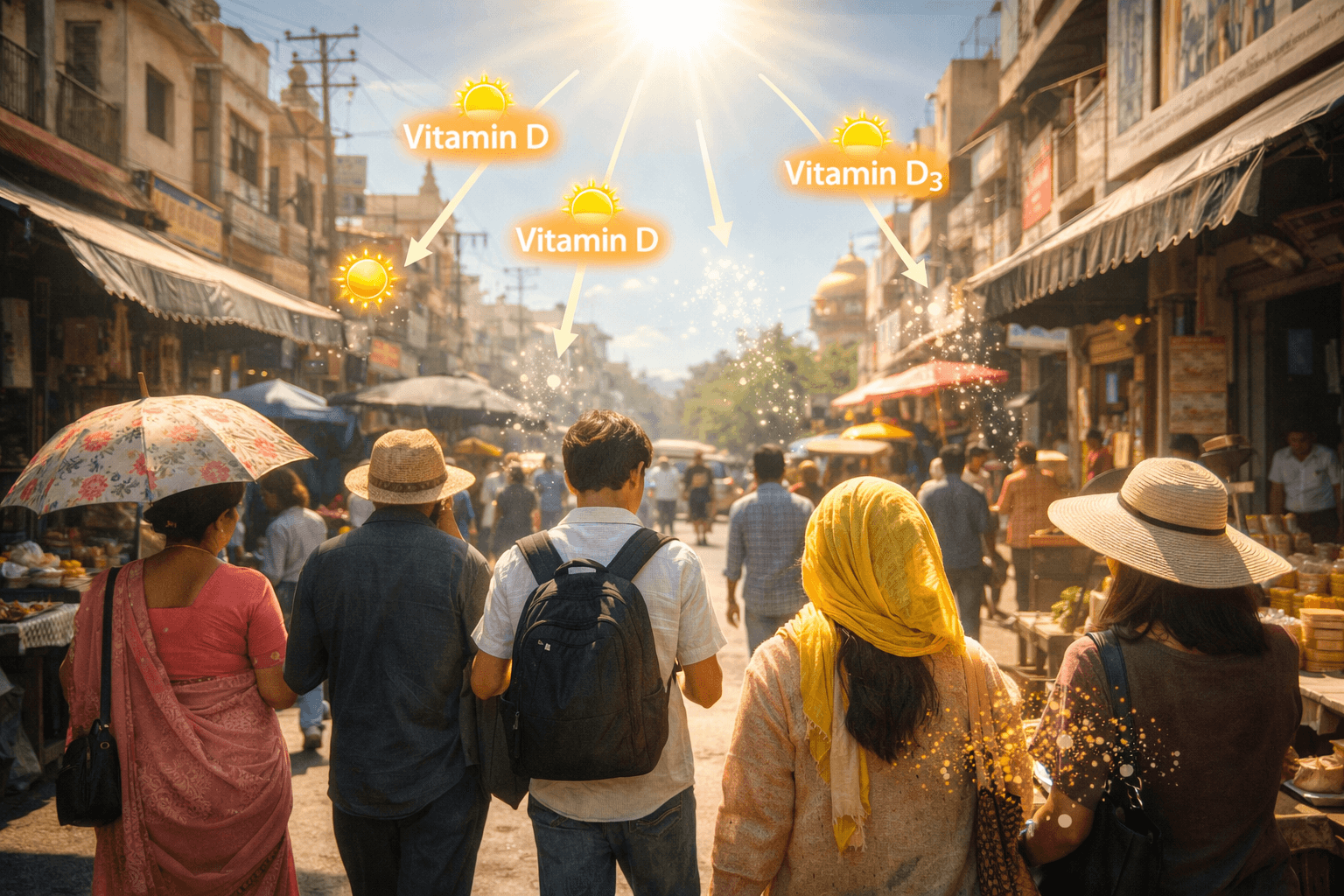
The Vitamin D Paradox
Why a Sun-Rich Country Still Faces a Vitamin D Crisis
India is one of the sunniest countries in the world.
Depending on the region, most cities receive over 300 sunny days every year. Step outside for even a few minutes during the afternoon, and the sunlight can feel intense enough to make you squint.
Which is why one statistic seems almost impossible.
Multiple studies estimate that 70–80% of Indians are Vitamin D deficient.
Not mildly low.
Clinically deficient.
How can a country flooded with sunlight have a population starved of the very vitamin produced by sunlight?
The answer lies in a complex interaction between genetics, skin pigmentation, modern lifestyles, and cultural habits. Together, they create what scientists now call the Vitamin D paradox of South Asia.
The Biology of Sunlight
Vitamin D is often called the “sunshine vitamin,” but technically it behaves more like a hormone.
Your body can produce it on its own — but only under very specific conditions.
The process works like this:
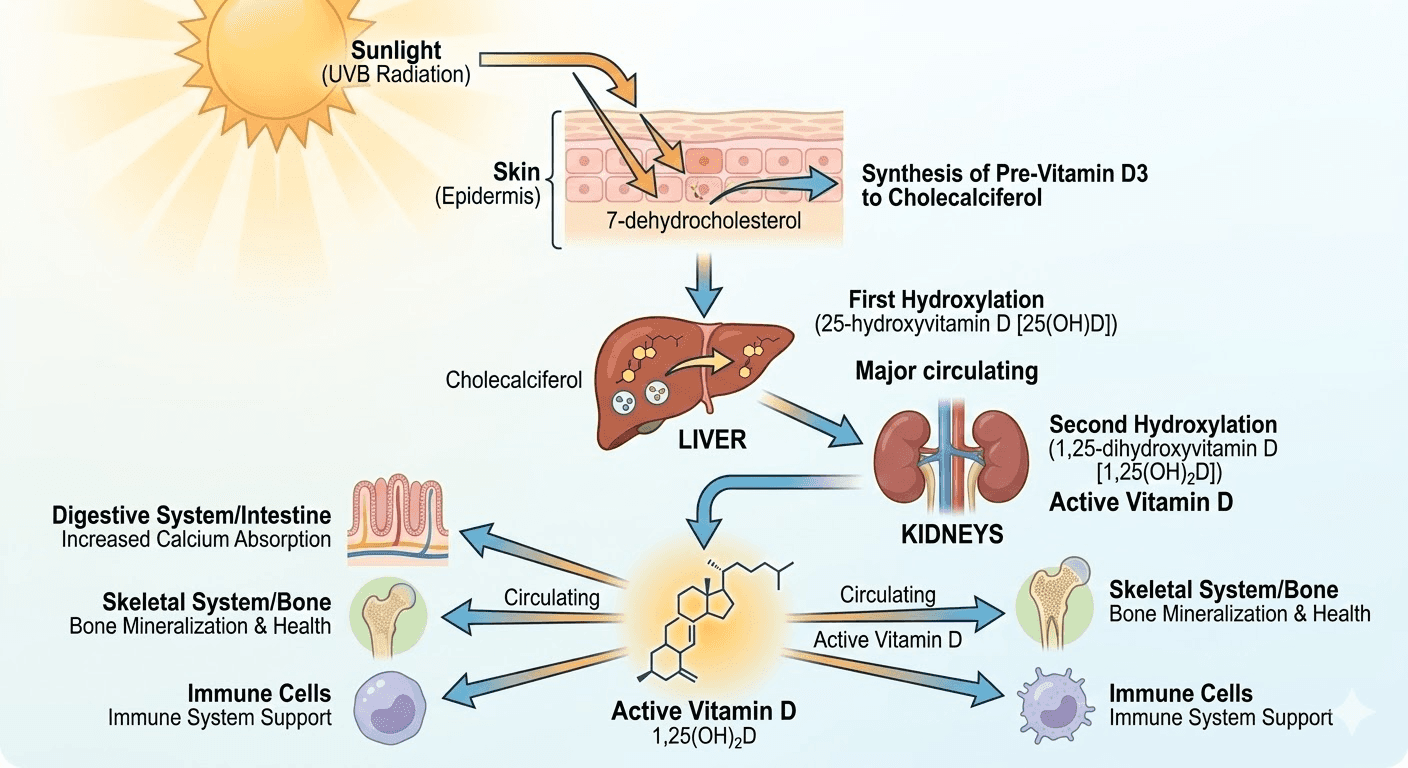
Ultraviolet B (UVB) rays from sunlight hit your skin.
A compound in the skin called 7-dehydrocholesterol absorbs the UVB radiation.
This triggers a chemical reaction that forms Vitamin D3.
The liver and kidneys then convert it into its active hormonal form.
Without UVB exposure, this process simply doesn’t start.
And here’s the critical detail: UVB rays must directly reach your skin.
Glass windows, sunscreen, clothing, and shade can block most of the radiation needed for Vitamin D synthesis.
Melanin: The Built-In Sunscreen
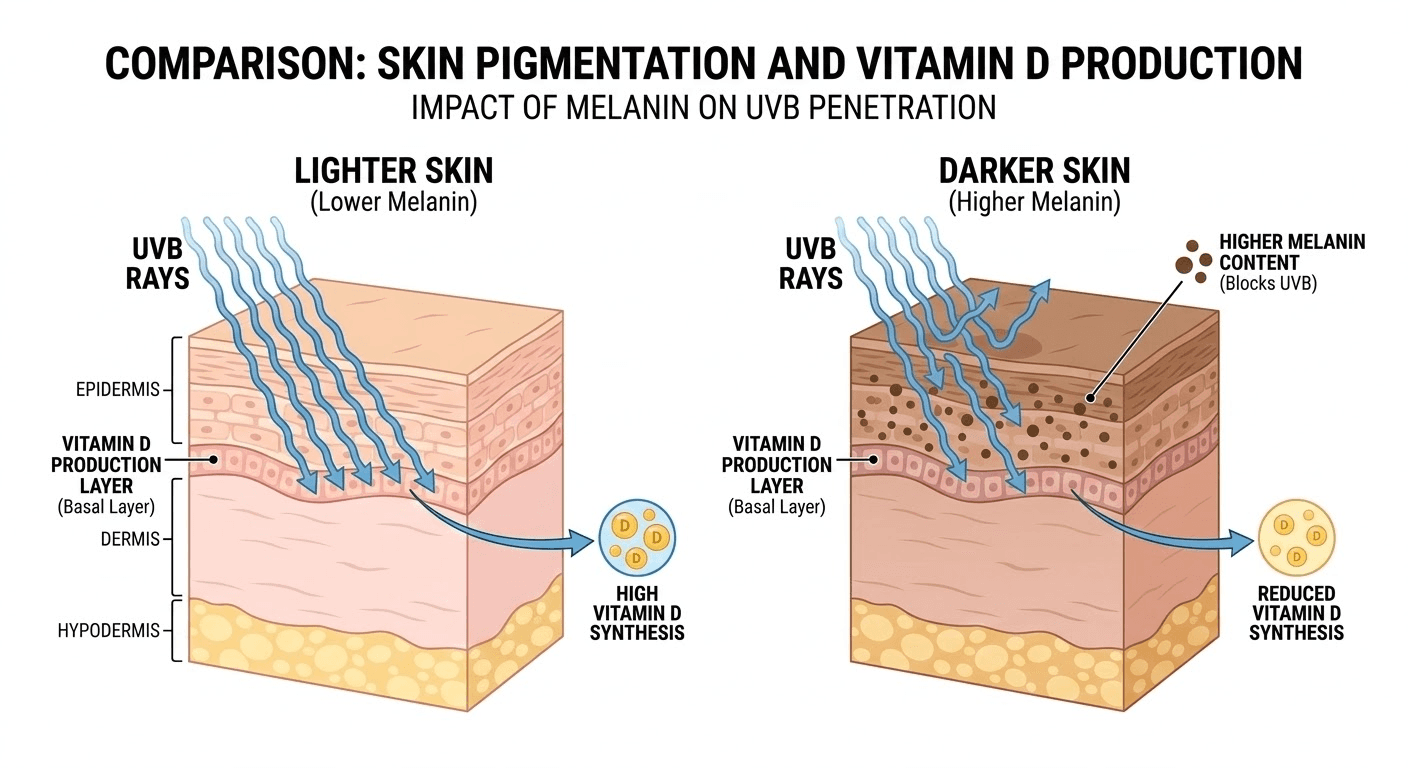
One of the biggest biological reasons for widespread deficiency in India is melanin.
Melanin is the pigment that gives skin its darker color. It evolved as a protective mechanism against intense ultraviolet radiation.
In sunny environments, darker skin acts like a natural sunscreen — reducing the risk of sunburn and DNA damage.
But that same protective pigment also reduces the skin’s ability to produce Vitamin D.
Research suggests that people with darker skin tones may require three to five times more sun exposure to produce the same amount of Vitamin D as someone with lighter skin.
For populations living in regions with intense sunlight, this trade-off historically made sense.
But when modern lifestyles limit sun exposure, the balance breaks down.
The Indoor Lifestyle Shift
A few generations ago, daily life in India involved significant outdoor exposure.
Farmers, laborers, street vendors, and students walking long distances all spent hours under natural sunlight.
Today, much of urban India lives differently.
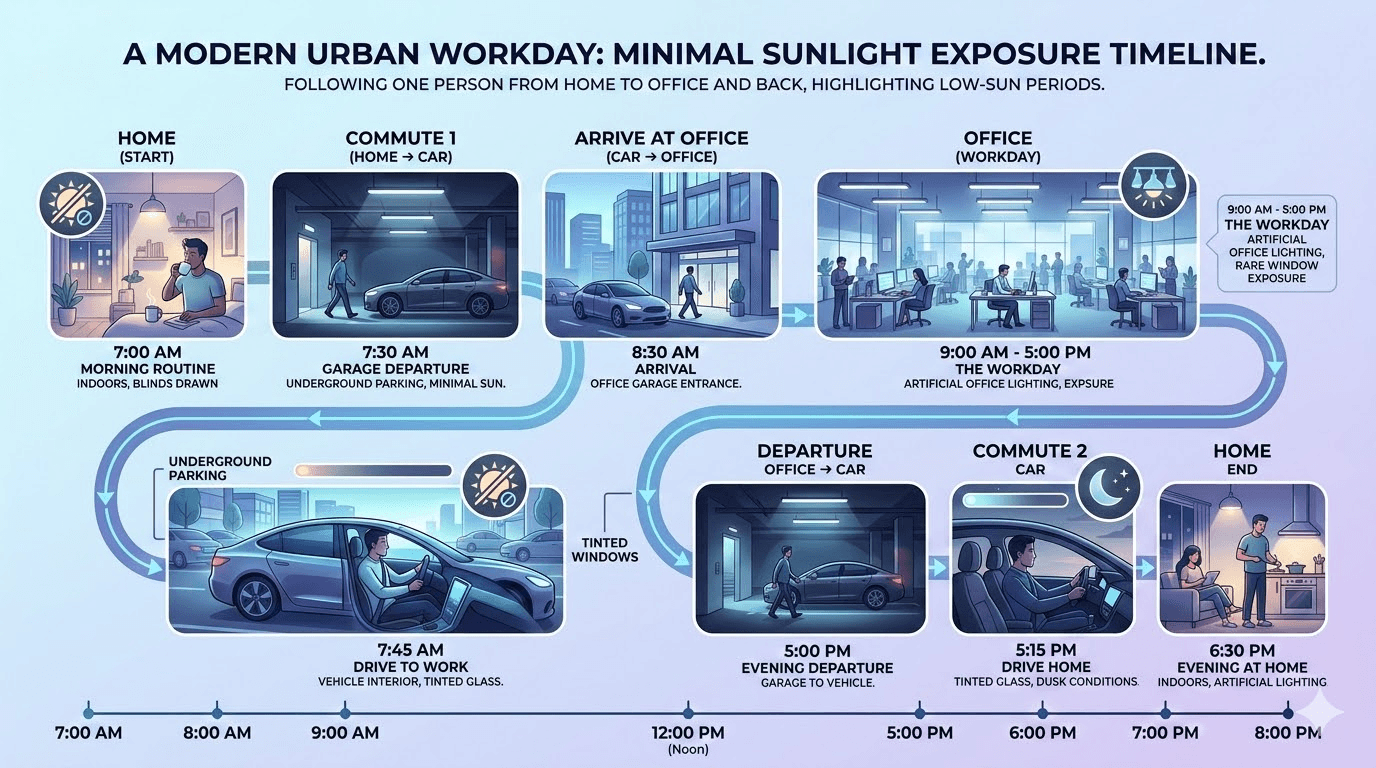
Consider the average weekday in a modern city:
Wake up indoors
Commute in a car, bus, or metro
Spend 8–10 hours inside an office or classroom
Return home after sunset
Even when people step outside, they often remain under covered walkways, shaded areas, or pollution-filtered sunlight.
Glass windows — whether in offices or apartments — block the majority of UVB rays required for Vitamin D production.
So despite living in a sunny country, many people’s actual skin exposure to sunlight is surprisingly low.
The Hidden Effects on Mood and Bones
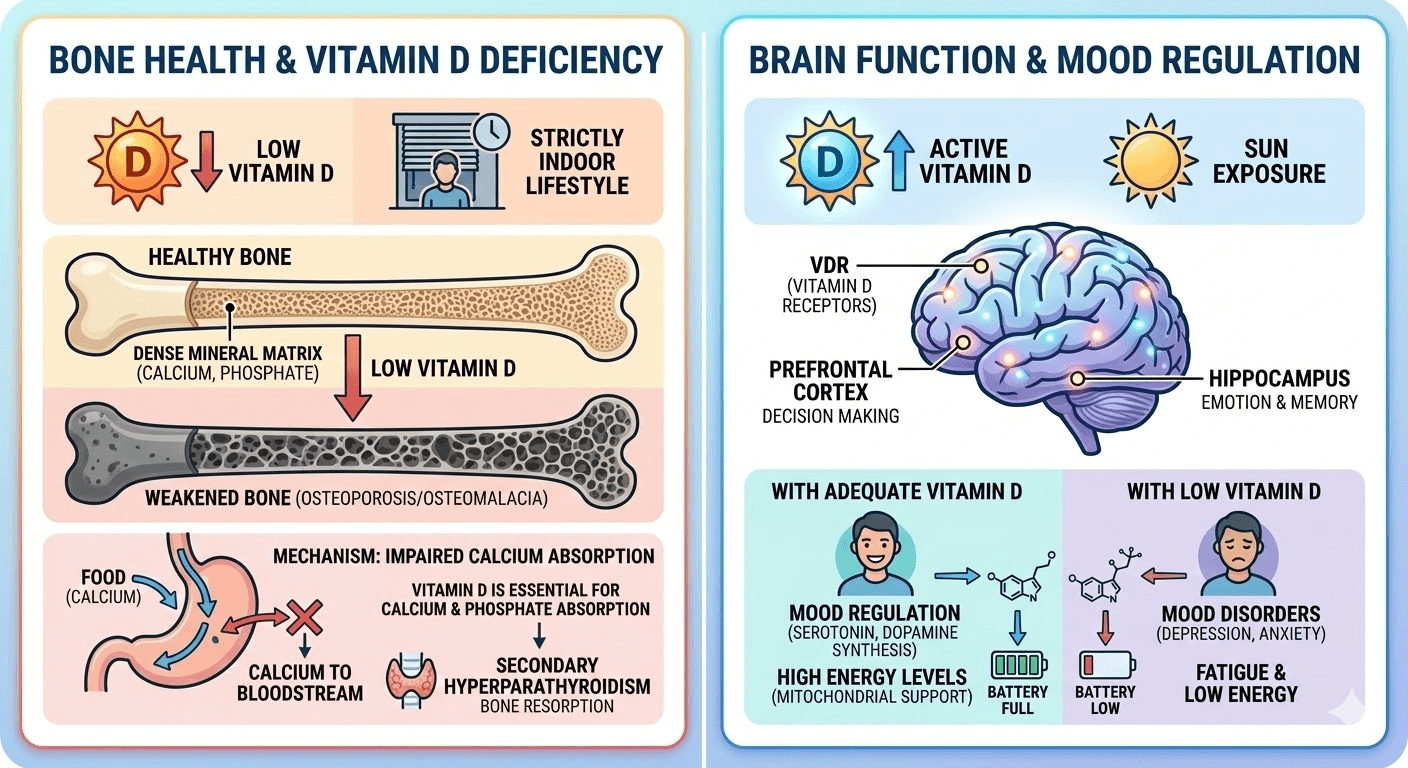
Vitamin D plays a far more significant role in the body than most people realize.
Its best-known function is regulating calcium absorption, which is essential for maintaining strong bones.
When Vitamin D levels drop too low, the body struggles to absorb calcium effectively. Over time, this can contribute to:
Weak bones
Increased fracture risk
Osteoporosis later in life
But bones are only part of the story.
Vitamin D receptors are found in many parts of the brain, particularly in areas associated with mood regulation.
Low Vitamin D levels have been linked to:
Fatigue
Low mood
Increased risk of depression
Reduced cognitive performance
While Vitamin D deficiency is not the sole cause of these conditions, it can quietly amplify them.
For people already dealing with stress, poor sleep, or sedentary lifestyles, the deficiency can make everything feel slightly harder.
What Actually Helps
Fixing Vitamin D deficiency is surprisingly straightforward once the causes are understood.
1. Short, Direct Sun Exposure
For many Indians, 15–30 minutes of midday sun exposure on arms and legs several times per week can significantly boost Vitamin D production.
Early morning sunlight, while pleasant, often lacks sufficient UVB radiation.
2. Reduce Over-Protection from Sunlight
Constant sunscreen use and full skin coverage can block Vitamin D production entirely. Limited unprotected exposure during short periods can help restore balance.
3. Food Sources Still Matter
Dietary Vitamin D is limited but helpful. Sources include:
Egg yolks
Fatty fish
Fortified dairy products
Mushrooms exposed to sunlight
4. Supplementation When Needed
For individuals with severe deficiency, doctors may recommend Vitamin D supplements under medical supervision.
Blood tests measuring 25-hydroxyvitamin D can confirm whether supplementation is necessary.
The Long Game
The Vitamin D paradox is one of the clearest examples of how modern lifestyles can outpace our biology.
Our ancestors evolved under constant sun exposure. Our bodies still expect it.
But modern life has quietly shifted us indoors — under roofs, behind glass, and away from the sunlight that once powered an essential hormonal system.
The irony is almost poetic.
A country bathed in sunlight.
And a population quietly running low on the vitamin it provides.
Sometimes the solution isn't a complicated diet or expensive supplement.
Sometimes it's simply stepping outside.

Reading Time
8 min read